

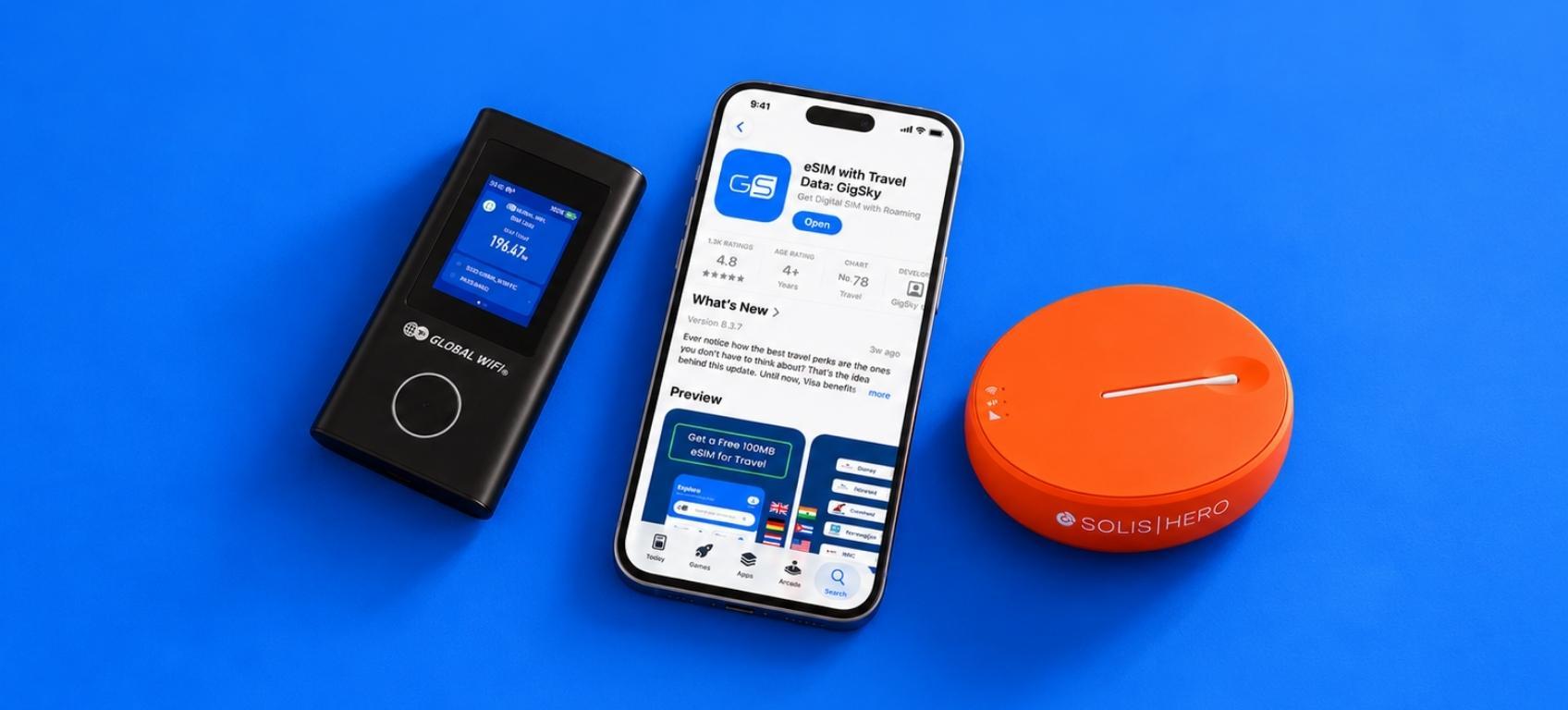


Best Portable WiFi Hotspots for Travel in 2026: Own, Rent, or Skip with eSIM
Compare the five best pocket WiFi hotspots for travel on price, coverage, and battery, then see the lighter eSIM option most travelers overlook.
 by Amira Bula
Staying connected abroad used to mean renting a pocket WiFi at the airport or buying one before your flight.
That still works, and the hardware has genuinely improved. This guide covers five of the best portable WiFi hotspots you can own or rent today, what each costs, and who it fits.
There's also a lighter option worth understanding before you spend anything on a device, one that's changed how a lot of people approach internet travel: the eSIM.
What are the best portable WiFi hotspots for travel?
The best portable WiFi hotspots for travel right now are the SIMO Solis lineup, the GlocalMe G4 Pro, Global WiFi's rental service, the Netgear Nighthawk M7, and RoamWiFi.
Each connects several of your gadgets to a local mobile network with no physical SIM to swap, and the right fit depends on how often you travel and how much data you go through.
Here's how the main portable WiFi devices compare before we get into the details.
| Device | Best for | Coverage | Device price | Data | Battery / devices |
|---|---|---|---|---|---|
| SIMO Solis (Hero / Edge / Pro) | Frequent travelers who want to own | 140+ countries | ~$180 (Hero) to ~$380 (Pro) | Day passes ~$8 to $10, unlimited $99/mo | 18 to 24h, 10 to 20 devices |
| GlocalMe G4 Pro / Numen Air 5G | Value multi-country trips | 200+ countries (5G in 90+) | ~$126 to $180 (G4 Pro) | Regional packs, e.g. 10GB SE Asia ~$14 to $17 | 12h+, 10 to 16 devices |
| Global WiFi (rental) | One-off trips, no ownership | 170+ countries | Rental, no purchase | Unlimited ~$11.90/day, 1GB ~$6.90/day | 15h+, ~10 devices |
| Netgear Nighthawk M7 | Power users, max speed | 140+ countries | ~$500 | $10 / 3GB / 7d up to $40 / 20GB / 30d | ~10h, up to 32 devices |
| RoamWiFi (R10 / 5G) | Budget, occasional US + intl | 170+ countries | ~$115 to $200 | Day passes from ~$3 | up to 20h, 10 to 16 devices |
SIMO Solis (Hero, Edge, Pro)
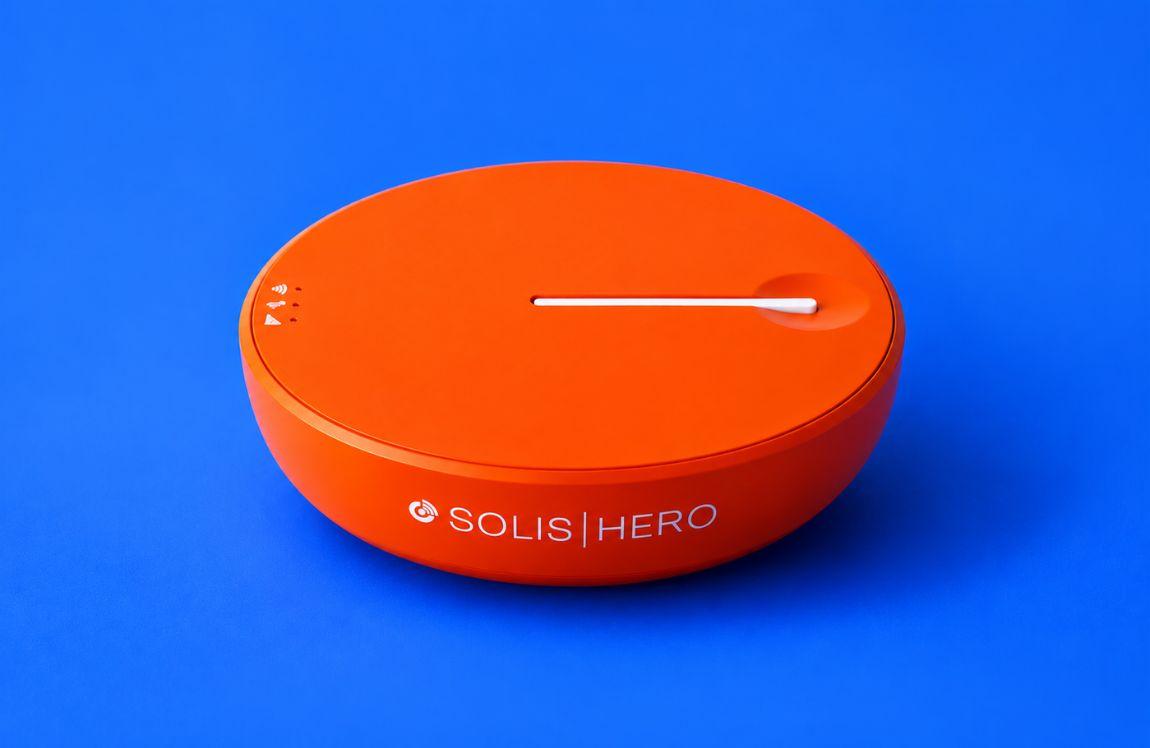
This one might be interesting for you, if you travel internationally several times a year and would rather own your gear than rent it each trip.
The Solis Hero 4G runs around $180, down from about $260, and comes with 1GB of free data every month for life, which is a rare perk in a pocket WiFi.
Step up to the Edge 5G near $320 or the Pro 5G around $380 for faster speeds. Data is pay as you go or subscription, with global day passes from roughly $8 to $10, per-GB from about $9, or unlimited at $99 a month.
Coverage reaches 140+ countries, the battery lasts 18 to 24 hours, and it doubles as a power bank.
GlocalMe G4 Pro (and Numen Air 5G)
Good value if you cross several borders on one trip. The G4 Pro shows up on sale around $126 to $180, while the newer Numen Air 5G sits closer to $264 and up.
Both use CloudSIM to pick networks automatically across 200+ countries, and the G4 Pro even has a nano-SIM slot if you want a local plan for a longer stay.
Data comes as separate regional packs bought in the app, so a 10GB Southeast Asia pack lands around $14 to $17.
As a WiFi hotspot device it handles 10 to 16 connected gadgets, with a screen that makes setup easy to follow.
Global WiFi (rental)
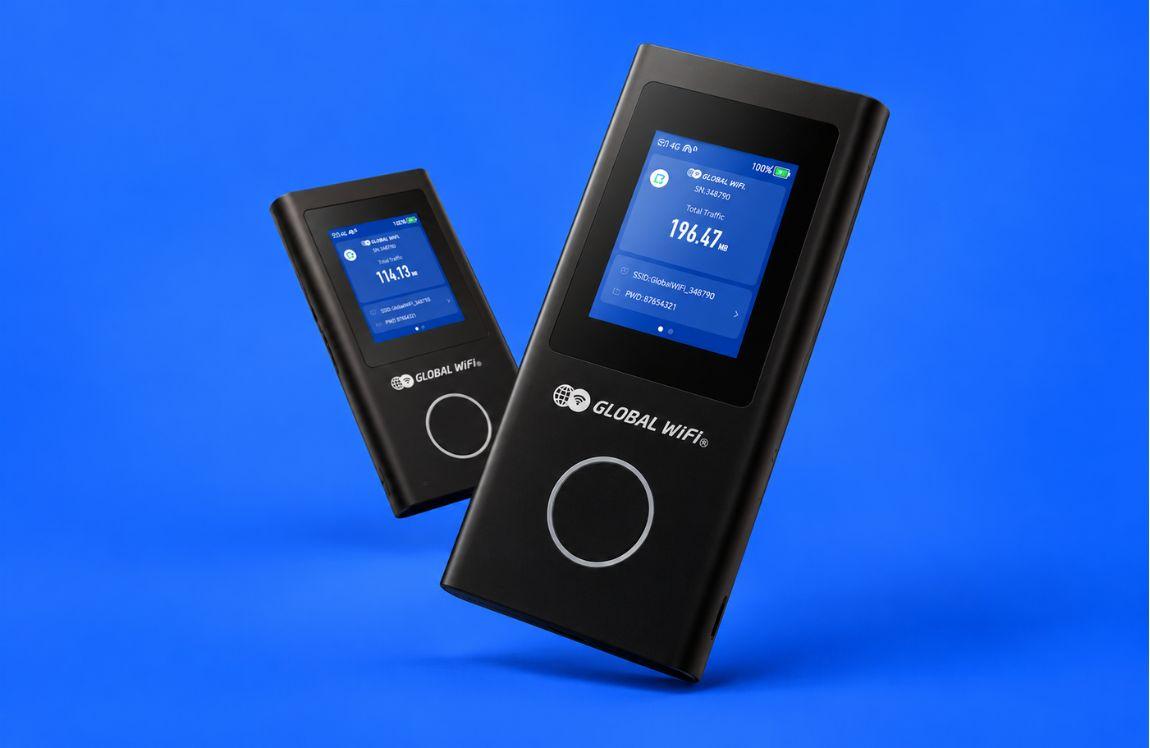
Renting makes sense for a single trip when you'd rather not own hardware you'll use once a year.
Global WiFi ships the pocket WiFi to your home or an airport pickup counter, and you send it back with the prepaid label when you're done.
Unlimited plans often run $11.90 a day, a 1GB option around $6.90, and pay as you go from $3.90.
Coverage spans 170+ countries and one device keeps about ten gadgets connected. The trade-off is the return logistics, and for frequent travelers the daily cost climbs faster than owning.
Netgear Nighthawk M7
This is the pick for power users who want maximum speed and a lot of connected devices at once.
At around $500 it's the priciest option here, but you get 5G with Wi-Fi 7, up to 3.6 Gbps, and room for 32 devices.
It takes your own carrier SIM or eSIM, or you can buy data through Netgear's in-app marketplace covering 140+ countries, say $10 for 3GB over 7 days up to $40 for 20GB over 30 days.
Among portable WiFi devices it's the one built to last a few years, which softens that upfront price if you travel constantly.
RoamWiFi (R10 and 5G models)
A solid budget starter, especially for US-based travelers adding the occasional trip abroad.
Device and data bundles run roughly $115 to $200 depending on the included data, for example about $150 for 10GB US plus 1GB global.
It runs on CloudSIM across 170+ countries with no physical SIM, battery lasts up to 20 hours, and it carries 10 to 16 gadgets.
Extra day passes start near $3. Speeds can vary trip to trip, so treat this pocket WiFi as a dependable everyday connection rather than a streaming machine.
The lighter alternative: eSIMs
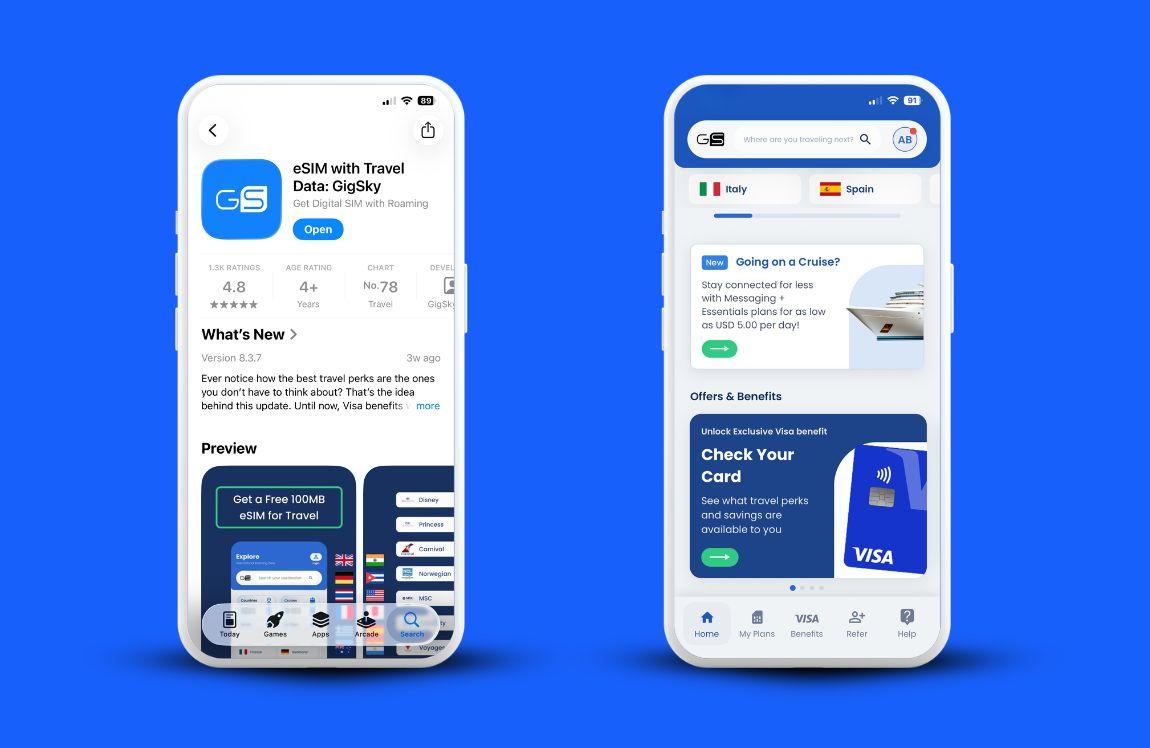
Here's the option a lot of travelers land on after one too many trips packing a charger for their hotspot.
An eSIM puts data straight on your phone, with no device to carry and nothing to charge or return.
You download an app, pick your destination, choose a plan, and you're connected. Plans start at $2.99, which is where the math starts to favor an eSIM over buying or renting a pocket WiFi for lighter trips.
GigSky is worth knowing here. It's a mobile operator rather than a reseller, so your phone connects to the strongest local network on arrival with no manual setup, and you install one eSIM that works across 200+ destinations and 290+ cruise ships, then reuse it on the next trip.
If you've never tried an eSIM and want to check it works on your phone first, GigSky offers a free trial from 100MB without adding a card, and eligible Visa cardholders can unlock 3 to 7 days of free unlimited data in selected destinations through the Visa banner in the app.
Download the GigSky app, search your destination, and see what free data is available before you pay for anything.
How to choose the right hotspot
If you want an affordable solution to share your data with travel companions or with other devices, eSIMs are the best option not only because they have the lowest price, but because you don't need to charge or carry an additional device apart from your phone.
If you'd rather have dedicated hardware, match the device to your travel pattern, not the spec sheet.
Owning a mid-range WiFi hotspot device like the Solis Hero or G4 Pro usually beats renting on cost over time if you fly a few times a year.
One trip this year? Renting is cleaner. Traveling with a group or working off the road, and you'll want the higher device count and speed of the Nighthawk.
Watch two numbers on every option: the price of the hardware and what the data costs per GB once you're abroad, because that second number is where budgets quietly slip.
FAQ
Is hotspot free?The feature itself costs nothing to switch on. What you're really paying for is the data behind it, whether that's your home carrier's roaming, a travel plan, or an eSIM. To share it:
- Open Settings.
- Tap Personal Hotspot.
- Turn on Allow Others to Join.
- On the second device, open its WiFi settings and select your phone.
- Enter the password shown on your phone.
On Android, the path is Settings, then Network and internet (or Connections on Samsung), then Hotspot and tethering, then turn on Mobile Hotspot.
Is the iPhone hotspot free?Turning on your iPhone's Personal Hotspot is free, but sharing it uses whatever data plan the phone is on. If a laptop or tablet pulls a lot of data through it, that shows up in your total usage, and it drains the phone's battery faster, so keep an eye on both.
Do I still need a WiFi hotspot device if I have an eSIM?Only if you need to share one connection across many gadgets at once, or you want a dedicated battery pack for it. For a phone, a tablet, and the odd laptop check-in, an eSIM usually covers it without the extra hardware.
Recap: Picking a travel hotspot
- Own a travel hotspot (Solis, GlocalMe, RoamWiFi) if you travel several times a year and want it to pay off over time.
- Rent from Global WiFi for a one-off trip where you'd rather not keep the hardware.
- Go with the Netgear Nighthawk M7 for groups, heavy use, or top speeds.
- Skip the hardware with an eSIM if you're mostly connecting a phone, with plans from $2.99 and a free trial to test first.
.jpg&w=3840&q=75)
%2520(19)-min.jpg&w=3840&q=75)
%2520(4).jpg&w=3840&q=75)