
.jpg&w=3840&q=75)


eSIM vs Pocket WiFi Japan: The Pros, the Cons, and the Smart Choice
Choosing between eSIM vs Pocket WiFi in Japan? This guide clears it all up, and reveals the smarter, lighter way to stay connected.
 by Alexis Miller
Staying connected in Japan means you won't miss your train, mistranslate a menu, or fumble at a cashless checkout. But choosing how to stay connected? That's where things get confusing.
Two options usually come up: eSIM and pocket WiFi Japan.
Not sure what either one is, or which makes more sense for your trip? Here's a quick guide to help you save money, skip tech stress, and actually enjoy your trip. Let's dive in.
| eSIM (GigSky) vs Pocket WiFi: Travel Internet Comparison | ||
|---|---|---|
| Feature | eSIM (GigSky) | Pocket WiFi |
| Setup | Fully digital, no physical SIM; install via app before your trip | Physical device rental, pick up at airport or have it shipped |
| Activation | Instantly connects when you land | Manual setup required; must be turned on and carried |
| Free Trial | 100MB - 3GB for 7–15 days with no credit card (GigSky) | No free trials offered |
| Hardware Needed | None | Separate device + charger |
| Data Plans | Starts at $4.99 for 1GB (7 days); unlimited & regional plans available | Typically $4–$10/day; may include deposit/insurance fees |
| Multi-country Use | Yes – regional plans cover 20+ Asian countries | Only works in Japan unless you rent a global version |
| Cruise Coverage | Yes – cruise data plans available via same eSIM | Not available for cruises |
| Group Use | Group plans available without needing to stay physically together | Can connect multiple devices, but only if you're near the router |
| Battery Life | No battery to manage | Must be charged daily; battery drains quickly |
| Return Required | No – nothing to return | Yes – device must be returned or shipped back |
| Device Compatibility | Requires unlocked, eSIM-compatible phone | Works with any WiFi-enabled device |
| Ideal For | Solo travelers, group travelers, light packers, digital nomads, cruise-goers | Travelers who don't mind carrying extra gear or staying together in a group |
What is an eSIM?
An eSIM is a digital version of a SIM card. You don't need to pop anything physical into your phone. No kiosks, no stores. Just download an app before your trip, pick your plan, and you're ready to go.
With providers like GigSky, you can activate your plan ahead of time and your phone will connect to the local network as soon as you land in Japan. No need for manual settings.
You can get started with a free trial. GigSky gives you 100MB of free data for 7 days, no credit card required, this is useful if you want to test how it works before committing.
For Visa Infinite or Signature cardholders in the US, Canada, Colombia, Peru, or Ecuador, you can get up to 1–3GB of free data for up to 15 days with a GigSky eSIM, usable in Japan and other 170+ countries.
Once you're ready, you've got several plan options. If you're just browsing maps and checking train times, 1GB for 7 days is only $4.99 but if you need more, you can get 3GB for $10.19, 5GB for $15.29, or go all in with 100GB for $114.74. There are also unlimited options starting at $6.99.
And if Japan is just one stop on your Asia adventure, there's a regional eSIM plan that covers 20 countries, including Korea, Vietnam, Taiwan, China, Thailand, and Australia. One eSIM. Multiple countries. No switching needed.
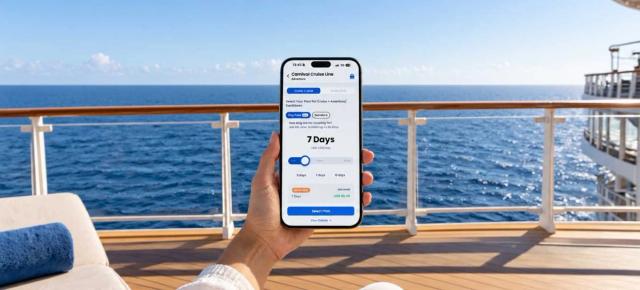
But here's something most people miss: GigSky also offers cruise data plans. That's right, if your Japan trip includes a cruise, you're still covered. Plans start at 512MB for $19.99 (good for a day), and go up to 20GB for $254.99 (valid for 120 days).
And yes, you can switch between land and sea coverage using just one app.
And if you're traveling with others? You're still good.
GigSky lets one person manage group data and share it across multiple people, without needing everyone to stay physically near a single device. It's group-ready, just without hardware.
Only thing to check before you dive in: make sure your phone is unlocked and eSIM-compatible. Some carriers keep phones locked until you finish your payment plan.
If that's the case, you might need to call and get it unlocked before your trip.
✅ eSIM – Pros
- No physical SIM card or device needed
- Instant activation when you land
- Free trial available with GigSky (100MB-3GB, 7-15 days)
- Affordable fixed and unlimited data plans
- Cruise plans available in Asia Pacific
- App makes it easy to manage and top up
- Nothing to return
❌ eSIM – Cons
- Requires an unlocked, eSIM-compatible phone
What About Pocket WiFi?
Japan pocket WiFi is the more old-school option, but still very popular, especially with groups or travelers using multiple devices.
It's basically a mini router you carry around. You rent it before your trip or at the airport, and it connects you to the internet through a shared signal.
You can usually link up 5 devices, so if you're with friends or family, it's easy to split the cost and stay connected.
Some travelers stick with it out of habit. If you've used it before and it worked, there's nothing wrong with going that route again.
But there are a few things to think about when considering the pocket wifi vs. esim japan debate.
First, you have to carry it all day, every day. It needs to stay charged, and the battery drains faster than you'd expect. If you forget to pack your power bank, you might find yourself without internet at the worst time.
Second, you'll need to return it. If you rented it at the airport, you'll need to drop it off before you fly home. Miss the return? You might get hit with a fine.
And finally, you're limited to one connection point. If someone in your group wanders off or you want to split up, only the person with the device gets the internet.
Cost-wise, it varies. Some plans are cheap, especially for light users, but once you start adding rental fees, insurance, and portable charger rentals, it starts to stack up. Some plans also limit your speed after you hit a certain amount of usage per day.
✅ Pocket WiFi – Pros
- Great for sharing across several devices
- Works with locked phones
- Familiar and reliable for many travelers
❌ Pocket WiFi – Cons
- Extra device to carry and charge
- Limited range, only works if you're near the router
- Must be returned at the end of the trip
- Has usage limits or throttling
- Can add hidden costs (deposits, damage fees, insurance)
So, What's Better?
That depends on how you like to travel.
When comparing esim vs pocket wifi japan options, if you're going solo, in a group, traveling light, hopping between countries or taking a cruise, an eSIM makes life easier. You set it up once, pick your plan, and you're online as soon as you land, with no hardware to carry and no returns to deal with.
If you're traveling with a group and everyone wants to share one connection point, pocket WiFi Japan can still work well. Just make sure you're okay with keeping it charged and carrying it around.
But more travelers are switching to eSIMs, because you save space, time, and money.
Plus, providers like GigSky give you flexibility: from short stays to long trips, from city roaming to cruise ship coverage, you've got options.
Traveling to Japan soon? Download the GigSky app and start your free trial.

eSIM vs Pocket WiFi Japan [Quick Recap]
- Setup: eSIM is digital (install via app), Pocket WiFi is a physical rental.
- Activation: eSIM connects instantly; Pocket WiFi requires manual setup.
- Trial: GigSky eSIM offers free data (100MB–3GB, 7–15 days); Pocket WiFi doesn't.
- Cost: eSIM plans Japan from $4.99; Pocket WiFi ~$4–$10/day + possible extra fees.
- Devices: eSIM needs an unlocked, eSIM-ready phone; Pocket WiFi works with anything.
- Travel Use: eSIM works across 20+ Asian countries + cruises; Pocket WiFi doesn't.
- Group Use: eSIM allows remote group sharing; Pocket WiFi requires staying near the device. Battery: eSIM has none; Pocket WiFi must be charged.
- Return: eSIM requires no return; Pocket WiFi must be returned.
Understanding the esim vs pocket wifi japan comparison helps you make the right choice for your travel style.
Whether you choose the convenience of an eSIM or the traditional approach of a pocket WiFi device, both options will keep you connected during your Japanese adventure.
The final verdict in this debate often comes down to personal preference and travel style, but the trend is clearly moving toward the simplicity and flexibility that eSIM technology offers.