



European Christmas Market Itinerary: 7, 10 & 14-Day Routes with Strong Bases (2026)
Plan a 7, 10 or 14-day Christmas market route through Germany, France and Austria with smarter timing and fewer hotel changes.
 by Amira Bula
A good European Christmas Market itinerary is built around two or three strong bases, with famous city markets on weekdays and small-town markets on Advent weekends.
Seven days is enough for Cologne and Alsace. With 14, you can continue through Nuremberg all the way to Vienna.
Most of these routes cross at least one border, so one Europe eSIM installed before you leave keeps your phone connected from the first market to the last.
Which Christmas market route fits your trip length?
The length of your trip determines how many places you can comfortably stay without spending too much time packing and moving around.
Each route below keeps hotel changes to a minimum and makes the most of easy day trips.
| Trip length | Route | Bases | Countries | Best for |
|---|---|---|---|---|
| 7 days | Cologne → Strasbourg and Colmar → Riquewihr | 3 | Germany, France | First-timers who want one big city and a village region |
| 10 days | Cologne → Alsace → Nuremberg | 3 | Germany, France | Travelers who want Bavarian towns by train |
| 14 days | Cologne → Alsace → Nuremberg → Vienna | 4 | Germany, France, Austria (Slovakia as a day trip) | A slower pace with plenty to do indoors |
| 14 days, Alpine | Vienna → Salzburg → Nuremberg → Munich | 4 | Austria, Germany | Mountain scenery, castles and Krampus traditions |
When should you plan the trip, and which days should you avoid?
Go during Advent and keep December 24 to 26 out of the market-heavy part of your route. Most markets close before Christmas itself, and that surprises a lot of first-time visitors.
Germany is the clearest example. Christmas Day and the days around it are some of the quietest of the year for sightseeing, because people stay home or visit relatives.
Many businesses close. The restaurants that do stay open are often already booked.
Among EU Christmas markets, the big-city ones are the easiest to plan around, since many of them run daily.
The smaller village markets, particularly in Austria and the Alps, may only open on Advent weekends or keep shorter hours midweek. So if one village or castle market is the reason you're going, confirm its operating days first and build everything else around it.
Crowds matter too. A large market that feels wonderful on a Monday can be hard to move through by Saturday evening.
One approach works well here: give your weekends to the small-town markets that only open Saturdays and Sundays, then see the famous city markets on Monday or another weekday.
Should you visit Christmas markets during the day or at night?
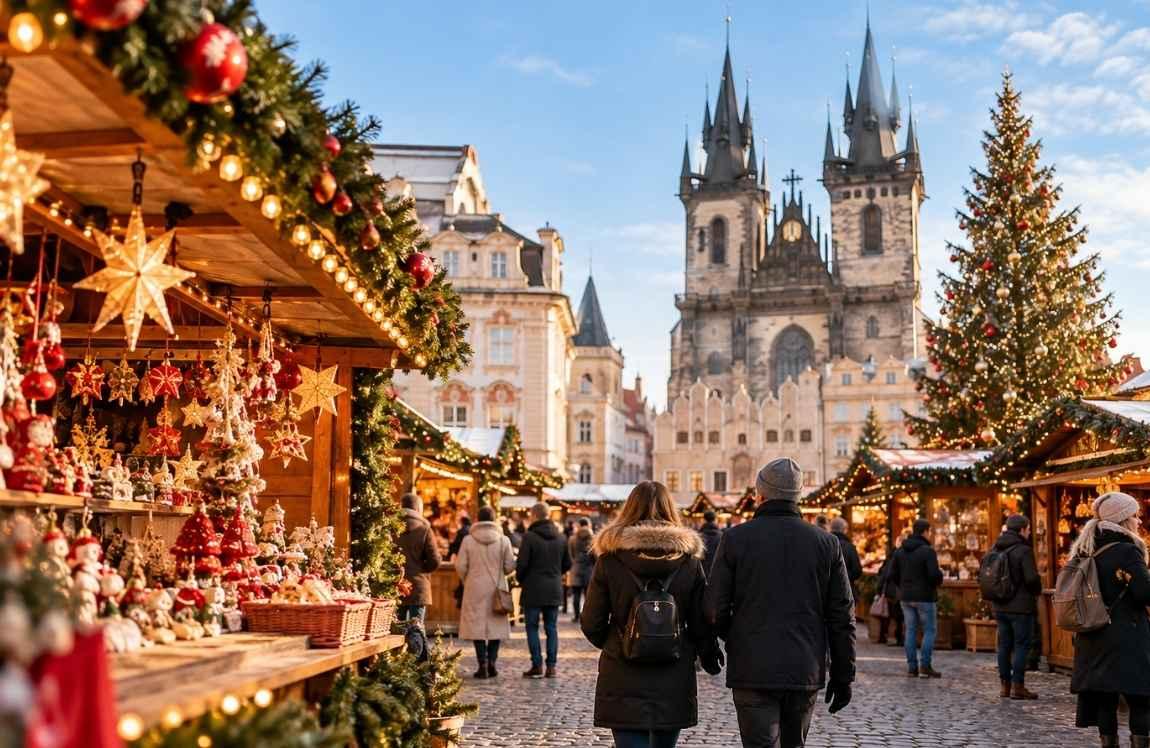
Both, ideally on the same day. Walk the stalls in daylight when there's room to browse, then come back after sunset for the lights.
Daytime is when you can look at the decorations properly and see what's for sale before the evening crowds arrive. After dark, though, the lighting changes everything. If the lights are a big reason you booked this trip, plan to be outside after sunset every evening.
Most markets only need a few hours. In Nuremberg, Vienna or Cologne, spend the day in the city itself and return once the lights are on.
That rhythm is also the simplest way to avoid market fatigue, which sets in faster than you'd expect. Christmas markets in Europe look completely different at 4 p.m. and at 8 p.m., so you get two experiences out of one stop.
What does the ideal 7-day European Christmas Market itinerary look like?
Two main bases and one smaller destination. Cologne, then Strasbourg and Colmar, then the villages of Alsace. For one week, that beats crossing half of Europe with four or five hotel changes.
Days 1 to 3: start in Cologne
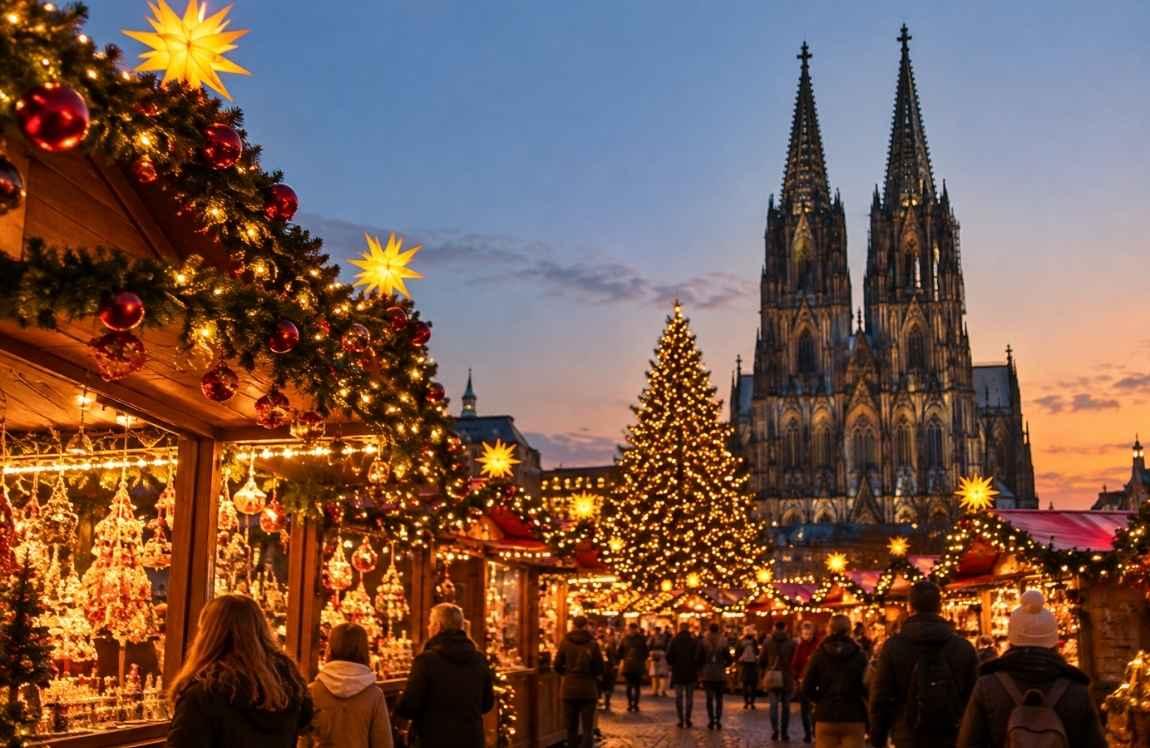
Cologne has several Christmas markets rather than a single one, and each is known for its theming. The city also gives you enough to do that you're not relying on wooden stalls and mulled wine to fill three days.
Use day one to get your bearings and see one market after dark. On day two, add another market or two, but don't turn it into a race to see every stall.
Markets can get crowded and pricey. They can also be lovely if you slow down long enough to stop for food and something hot to drink.
An extra day? Aachen is an easy addition. Merode Castle, in the general Cologne and Aachen area, gives you a completely different atmosphere.
Days 4 and 5: Strasbourg and Colmar
Head south into Alsace, one of the regions travelers praise most for a Christmas trip. It feels more intimate than the big German cities, with old streets and small towns sitting close together.
Strasbourg is extremely popular. Colmar is described, again and again, simply as beautiful, and it's the better base if you plan to explore the surrounding towns. Split the two days between them, seeing the old streets in daylight and the Christmas displays after dark.
You might see Baden-Baden on the map and think it's close enough to add. It sits toward the northern end of the Black Forest, and travel times to the southern towns get longer than they look.
Days 6 and 7: Riquewihr and the small Alsatian towns
End the week away from the big-city format. Riquewihr works well as a base if you have a rental car and want to visit several small towns nearby.
This is where the trip stops being about ticking off another major market. You're walking through decorated old villages and stopping at smaller stalls, with no list to get through.
If the Christmas atmosphere is what you came for, these two days give you more of it than one more major city would.
How do you spend 10 days on a Christmas market trip?
Keep the 7-day route for the first six days, then give the last four to Nuremberg. That adds a whole new Christmas region without making the trip feel rushed.
Nuremberg works so well as a final base because you can stay put and reach several Bavarian towns by train.
Its market is a classic, the one many travelers think of first when they talk about the best Christmas markets in Europe.
The city is full of history too, so the market is only part of the reason to go. After you've explored it, try the local roast bratwurst, including the classic 3 im Weggla, which means three sausages in a bun.
Then let Nuremberg do the work. Bamberg is around 40 minutes away by train and has a "little Venice" feel.
Ansbach is roughly 25 minutes away. Regensburg has a medieval walled city center that's popular year-round, and the Christmas season adds another layer to it.
Four nights in one hotel with day trips is a much better use of the time than four different hotels.
How should you plan a 14-day European Christmas Market itinerary?
Use four bases: Cologne, Alsace, Nuremberg and Vienna. Two weeks gives you Germany, France and Austria with time to slow down along the way.
Nuremberg and the Bavarian towns (days 7 to 9)
After Alsace, continue to Nuremberg and give the city at least one full day rather than treating the main market as a two-hour stop. Then use a day or two for Regensburg, Bamberg or Ansbach.
If handcrafted decorations are a priority, the smaller German towns deserve as much attention as the famous city markets.
Large-city markets can start to feel surprisingly alike, almost as if one company set them all up, with familiar signage and the same food options.
Smaller towns are where you're more likely to find handmade, local Christmas items. Seiffen is known for its traditional handmade wooden ornaments.
Dresden is worth a look if you'd rather build a different German route, since it has one of the oldest Christmas market traditions and several markets to go with it. You can pair it with Seiffen, too.
Vienna to finish (days 10 to 14)
Vienna is the place to slow down. Its markets are often described as more chic, but what makes Vienna so useful is everything around them.
Short days and cold weather matter much less in a city with this much to do indoors.
One market sits right beside St. Stephen's Cathedral, and it's the kind of setting most people have in mind when they plan a Christmas trip to Europe.
Spend your days in Vienna and save the markets for the evening once the lights come on. You don't need to see all of them. The 10th market probably won't feel very different from the 15th.
Use one of your Vienna days for Bratislava instead. The train takes roughly an hour, city center to city center.
Bratislava has its own Christmas market and tends to cost less than Vienna, and you can round off the evening at the ballet or the opera.
Is there a 14-day route through Austria and Germany instead?
Yes. If Alpine scenery matters more to you than France, go to Vienna, Salzburg, Nuremberg, then Munich.
Vienna gives you the elegant city experience and the indoor attractions. Salzburg is a strong second base because it puts the smaller Alpine towns within reach, and Wolfgangsee and the Salzkammergut area bring lakes and mountain villages into the trip.
Traveling in early December? Krampus traditions can change the whole experience. Salzburg has Krampus events.
In the Gastein Valley, including Bad Gastein and Bad Hofgastein, Krampus groups can move through the valley visiting hotels and shops. Altenmarkt im Pongau, about an hour from Salzburg by train, is also known for its Krampuslauf.
From Salzburg, move on to Nuremberg for the classic German market atmosphere and its day trips, then finish in Munich with the option of visiting Füssen and Neuschwanstein. Markets end up being one part of a trip that also has mountains, castles, historic cities and good food.
How many Christmas markets should you visit?
There's no perfect number, but more isn't better. After several large markets, you'll notice the same kinds of stalls selling much of the same merchandise.
That doesn't make them less worth visiting. If you've never been to a German or Austrian Christmas market, the first few are a great experience.
Even the best Christmas markets in Europe start to blur together, though, if every hour of a 14-day vacation is spent at one.
A useful test for each stop on your route: would you still want to go there if the Christmas market disappeared tomorrow? If yes, keep it, and treat the market as part of the evening.
Choose a few famous markets and a few small-town or unusual-setting ones, then leave the rest of your time open for the place itself.
Why should you mix big cities with small towns?
Because each gives you something the other can't. Cologne, Vienna, Munich and Dresden each have multiple markets and good transport, plus plenty to do when it's cold and dark by 5 p.m.
Small towns change the mood. Riquewihr opens up the villages of Alsace, and Regensburg adds a medieval setting.
Some of the best Christmas markets in Europe for atmosphere are weekend-only markets held in gorges or around castles, which feel very different from another central square.
Ravenna Gorge is visually striking but can get very crowded. Hohenzollern Castle has hosted a Christmas market in its courtyard, although getting there without a car can be difficult. Merode Castle near Aachen and Cologne is another good option if you want a castle setting.
The combination matters more than picking a single "best" market.
How do you avoid changing hotels every night?
Pick strong bases and make day trips from them. Carrying luggage through winter train stations every morning wears you out quickly.
Nuremberg connects you with several Bavarian towns. Vienna gives you Bratislava, Salzburg the Alpine towns, and Colmar or Strasbourg can anchor the Alsace section.
For a longer route, the Danube makes a natural Christmas-season corridor: Budapest, Vienna, Melk, Linz, Passau, Regensburg and Nuremberg, with several markets along the way and no zigzagging across the map.
A good itinerary usually has fewer pins on the map than you'd expect, and the travel in between still feels like part of the vacation.
How do you stay connected when your route crosses borders?
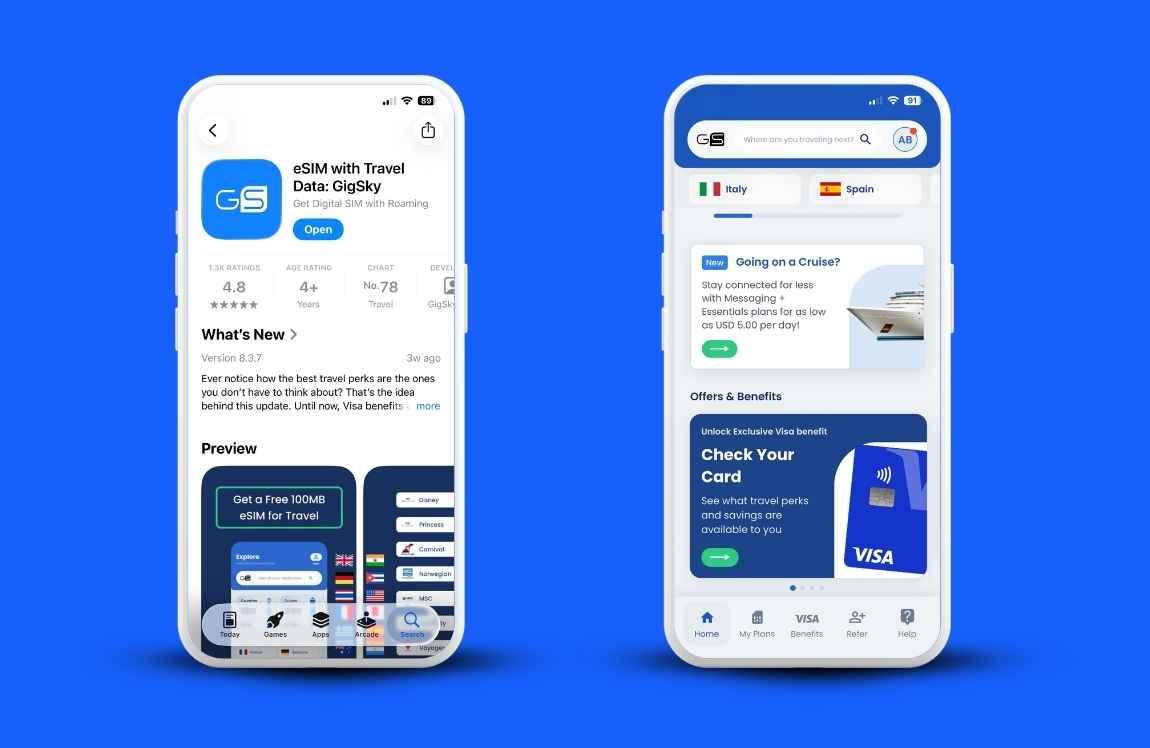
Use one eSIM that covers every country on your route. GigSky’s Europe eSIM covers 41 countries with a single eSIM you install once in the app, so the whole route runs on the same plan.
On a trip like this, your phone does a lot of quiet work. You're checking train times between Strasbourg and Nuremberg or confirming whether a village market opens on a Thursday.
Later, it's the map that gets you back to the hotel through an old town after dark. The 7-day route alone crosses from Germany into France, and the Bratislava day trip adds Slovakia.
Most routes through the Christmas markets in Europe involve at least one border, often more.
GigSky is a mobile operator rather than a reseller, so when your train crosses into a new country, your phone connects to the strongest available local network by itself.
You won't need to buy a new plan at the border or change any settings when you arrive.
If you'd like to test it first, GigSky gives you 100MB free in European countries, with no card needed.
And if you have an eligible Visa card, tap the Visa banner in the app to see what you qualify for. France is one of the Visa Destinations, so eligible Visa cardholders can get up to 7 days of unlimited data there depending on the card tier, and cardholders from the Americas can unlock 1 - 10 GB free. Checking your card doesn't charge it.
What if your trip includes Christmas itself?
Plan December 24 to 26 separately, and expect them to feel very different from early December. In Germany especially, many markets are already closed and much of normal city life shuts down while people spend the holiday at home.
Arriving on Christmas Day expecting the scenes from early-December photos usually leads to disappointment.
Advent and Christmas are two different travel experiences. For the classic atmosphere of lit-up squares and busy food stalls, schedule the market-heavy part of your trip before Christmas.
Then check each of the EU Christmas markets on your list one by one, since opening dates vary and they change from year to year.
How do you keep the trip feeling special?
Plan around the cities and let the markets fill your evenings. Christmas markets can be loud and crowded, and after a while, a bit repetitive. They can also be wonderful, and the difference usually comes down to planning.
See the major markets on weekdays when you can. Explore in daylight and come back for the lights. Weekends belong to the small markets that only open on Advent Saturdays and Sundays.
Eat the regional food, and look for locally made pieces rather than treating each market as a shopping trip.
You don't need to see every stall. Walk around for a few hours, have something hot, order something you wouldn't normally try, then go do something else in the city.
A European Christmas Market trip works best when the markets tie the journey together instead of running it.
Seven days will feel full instead of rushed, and two weeks won't turn into the same mugs and sausages on repeat.
FAQs
How many days do you need for a Christmas market trip?
Seven days is enough for two or three bases, such as Cologne and Alsace. Ten to 14 days lets you add Nuremberg, Vienna or an Alpine route without rushing.
Are German Christmas markets open on Christmas Day?
Most aren't. Many markets close before December 25, so plan the market portion of your trip during Advent and check each market's dates individually.
Which city works best as a base for day trips?
Nuremberg is one of the strongest options. Bamberg is about 40 minutes away by train, Ansbach about 25 minutes, and Regensburg is also within reach.
Do you need a different SIM card for each country?
No. A Europe eSIM like GigSky covers Germany, France and many other European countries with one installation, and it connects automatically when you cross a border.
Can you try GigSky before paying?
Yes. GigSky gives you up to 100MB free in European countries without adding a card, and eligible Visa cardholders can unlock additional free data through the Visa banner in the app.
Recap: Christmas Market Itinerary: 7, 10 & 14-Day Routes
- Build your route around two to four bases and use day trips instead of changing hotels every night.
- Seven days covers Cologne and Alsace; 10 days adds Nuremberg; 14 days can reach Vienna or follow an Alpine route through Salzburg and Munich.
- Visit big-city markets on weekdays and save weekends for small markets that only open during Advent.
- Explore cities by day and return to the markets after sunset for the lights.
- Keep December 24 to 26 separate from the market-heavy part of your trip, and confirm each market's dates.
- Mix famous markets with small towns like Riquewihr, Seiffen, Bamberg and Regensburg.
- One GigSky eSIM keeps you connected across 41 European countries, with up to 100MB free to try it and extra free data for eligible Visa cardholders.
%2520-%25202026-07-23T165641.302.jpg&w=3840&q=75)
%2520(27).jpg&w=3840&q=75)
%2520-%25202026-07-01T150219.190.jpg&w=3840&q=75)