




9 Tips for Living in Germany: Prioritize Anmeldung, Housing & the First 14 Days Before Anything Else
Moving to Germany? These 9 tips cover Anmeldung, housing, contracts and trains, so your first year feels calmer and far more organized.
 by Amira Bula
The best tips for living in Germany have less to do with culture shock and more to do with paperwork.
You have 14 days after moving in to register your address, and that one step opens the door to your tax ID, most bank accounts and many phone contracts.
Housing, language and train schedules will shape your first months too. Your phone does a lot of heavy lifting before any German contract exists, so it helps to land with data already running through GigSky.
Your first-month priorities at a glance
Most newcomers end up following roughly this order, whether they plan it or not.
| Task | When to do it | Why it matters |
|---|---|---|
| Mobile data | Before you land | Maps, translation, apartment listings and appointment bookings from day one |
| Health insurance | Before or on arrival | Mandatory for residents and required for most visas and work permits |
| Anmeldung (address registration) | Within 14 days of moving in | Needed for your tax ID, most bank accounts and many contracts |
| Bank account | Right after Anmeldung | Rent, salary and direct debits run through it |
| Personal liability insurance | First month | Covers accidental damage to other people's property |
| German course | First few months | Opens up more jobs and makes official letters readable |
1. Stay on top of German bureaucracy
German bureaucracy is easiest to handle when you treat it like a project with deadlines, because one delayed document can hold up the next three.
Your address registration, residence permit, health insurance and degree recognition all connect to each other.
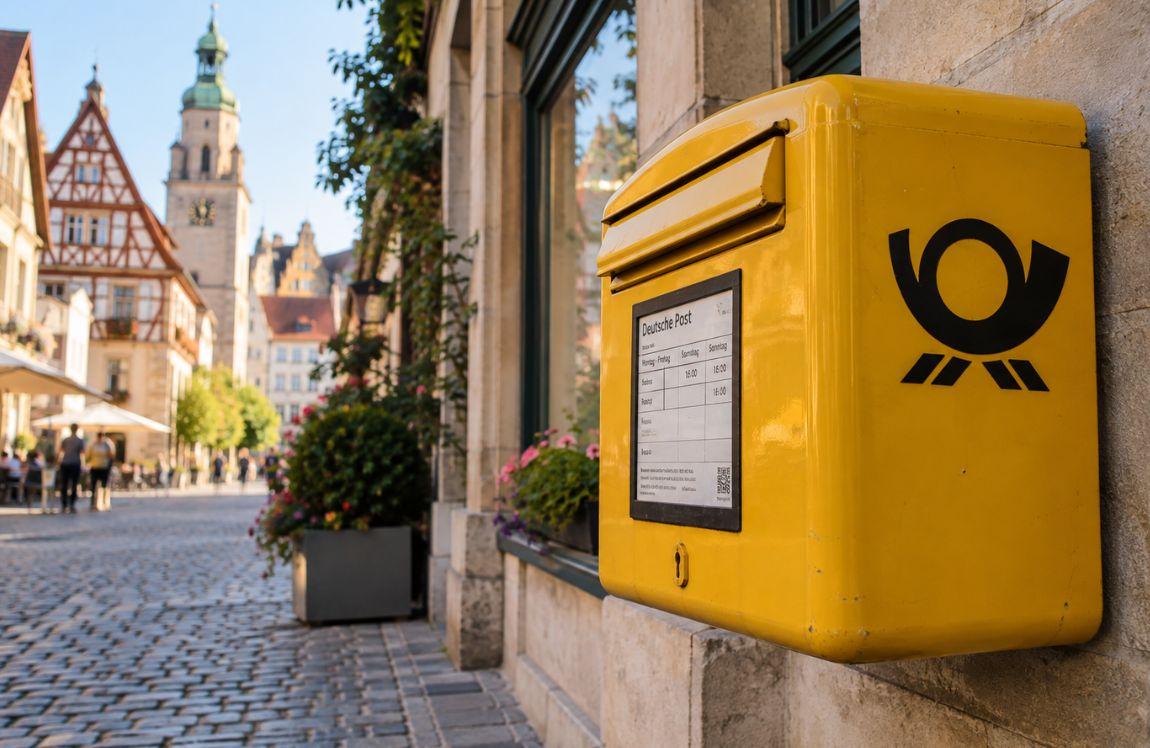
Most of life in Germany still runs on paper, and it arrives in your mailbox. After you register, expect letters about your tax ID, your health insurance and the Rundfunkbeitrag, the broadcasting fee every household pays. Some come with a deadline (a Frist).
Open them the day they arrive. If German is dense, a translation app with a camera mode will read the letter for you in seconds, and a colleague or neighbor can usually explain the rest.
Appointments are the other bottleneck. In Berlin, a slot at the Bürgeramt can be booked out for weeks, so reserve one before you even have your keys and check back often, since canceled slots open up without warning.
If you studied abroad, look up whether your degree needs formal recognition on the Anerkennung in Deutschland portal before applying for regulated jobs like nursing or teaching.
Buy a folder. A real one. Germans call it an Ordner, and yours will hold your rental contract, registration certificate, insurance policies and every official letter you receive. Keep scans of the same papers in the cloud.
2. Solve housing and Anmeldung together

Housing and Anmeldung depend on each other, so it pays to plan them as one step. Landlords often ask for proof of income, an employment contract and a SCHUFA credit report, while you can't complete your registration without an address.
That loop catches a lot of newcomers. The way out starts before you sign a lease. Ask the landlord directly whether you can register at the address and whether they'll give you the Wohnungsgeberbestätigung, the landlord confirmation form the registration office requires.
Some sublets and furnished short-term rentals won't provide it, and without it your tax ID, your bank account and even your first paycheck can stall.
Look beyond the city center. Rent in central Munich or Frankfurt can swallow a large share of a first salary, while towns along regional rail lines, like Augsburg for Munich or Darmstadt for Frankfurt, usually come with less competition and a commute under an hour.
Have your application documents ready before viewings start and send them the same day.
If you're new, you won't have a SCHUFA history yet, so your employment contract and a few months of bank statements can help fill the gap.
Budget for the deposit (Kaution), which can legally be up to three months' net rent, plus the first month's rent on top.
3. Stay connected before you have a German phone contract
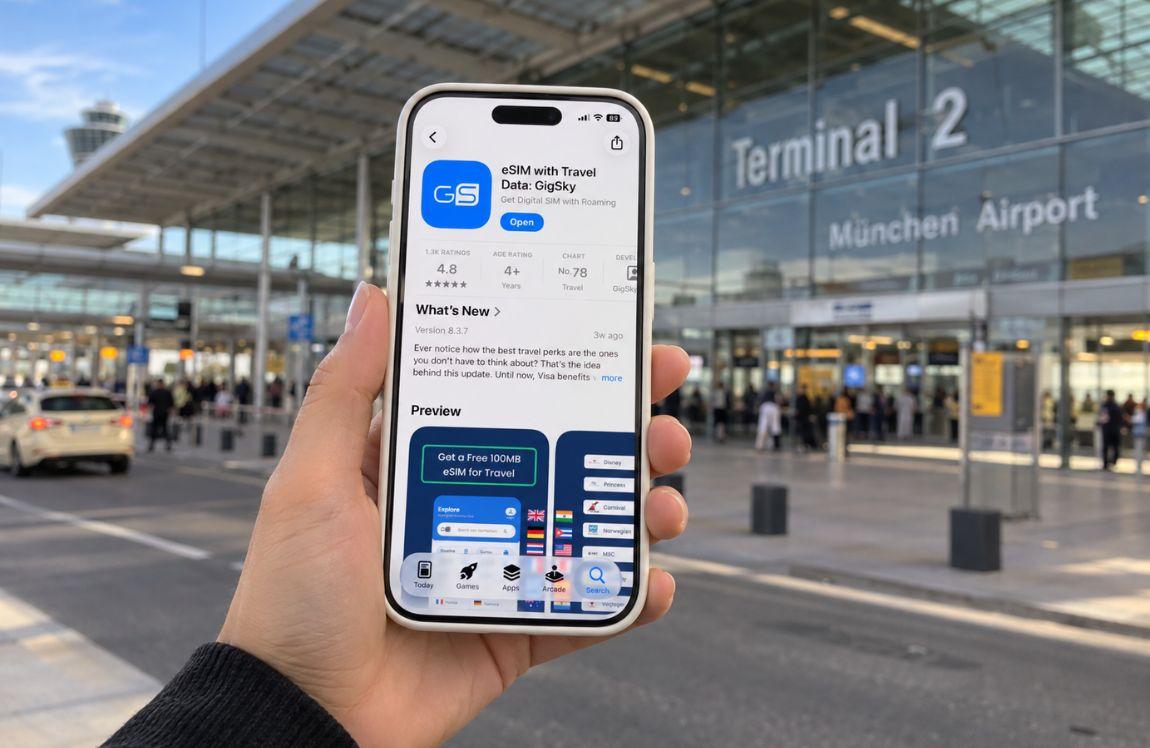
The simplest way to stay connected in your first weeks is an eSIM you set up before your flight, since most German phone contracts ask for a registered address, a bank account or ID verification before they start.
Those first weeks are when you need data most. You're checking apartment listings between viewings, booking a Bürgeramt appointment, translating letters with your camera and finding your way around a city you don't know yet.
If you're planning on living in Germany long term and traveling around Europe (or farther) on weekends and holidays, an eSIM subscription makes more sense than buying a new plan for each trip.
GigSky One is a monthly subscription covering 120+ countries, Germany included, so a weekend in Prague or a work trip to Madrid doesn't mean swapping SIM cards or setting up roaming. Plans range from 25GB to 75GB.
GigSky works as a mobile operator rather than a reseller. It partners directly with local networks and connects your phone to the strongest one available, which helps on long train rides through rural stretches.
You install the eSIM once in the app, and when you land it connects on its own, with no settings to change.
One honest note. Many residents still keep a German number for bank verification codes and appointment confirmations. A dual-SIM phone handles both, with GigSky One carrying your data.
Want to try it first? Search "Germany" in the GigSky app to see what free trial data is available. You won't need to add a card.
4. Learn German for real Life, not just for class
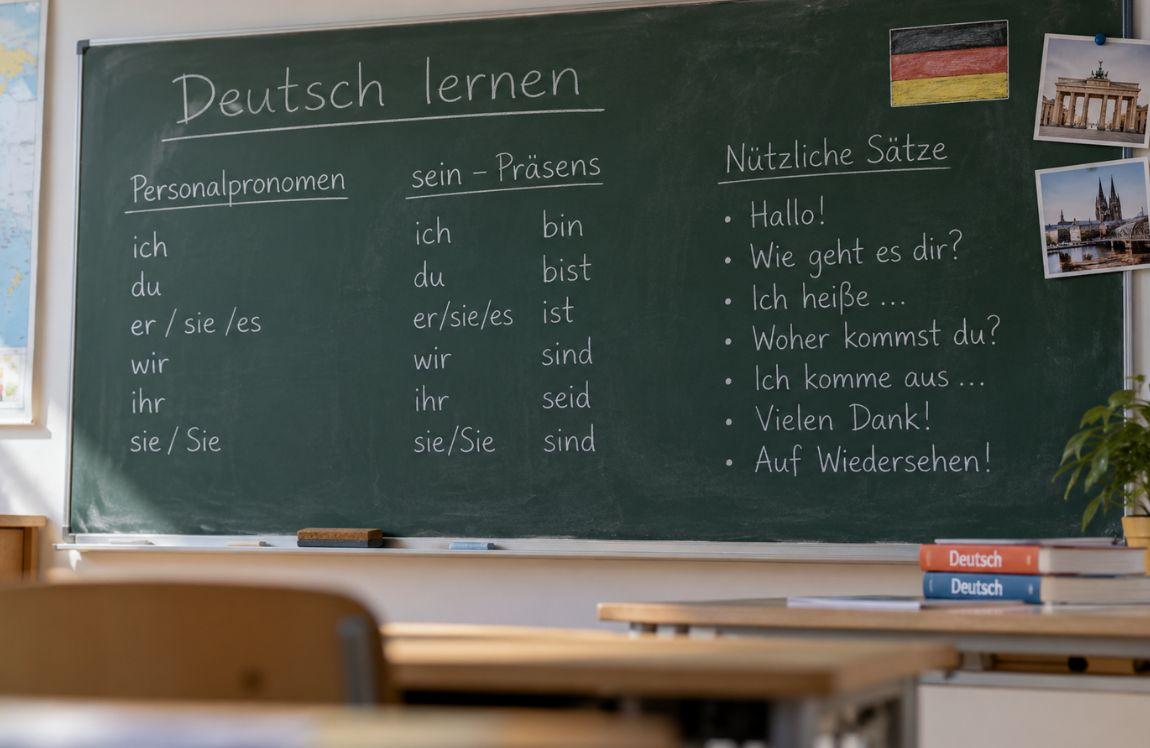
You can manage in English for a while, especially in Berlin, at universities or in tech companies, but German becomes necessary once you read contracts, talk to landlords, see a doctor or look for work beyond international employers.
The limits tend to show up quietly, usually in a job listing that asks for fluent German or a twelve-page rental contract full of clauses about Nebenkosten (utility costs).
Treat learning German as part of the move itself. Volkshochschule (VHS) courses are affordable in most cities, and eligible residents can join a government-subsidized integration course (Integrationskurs) through the Federal Office for Migration and Refugees.
Classes help, but most of the progress comes from daily use, so order at the bakery in German, make your own appointments and keep going even when people switch to English to be kind.
Start with the vocabulary that shows up in your mailbox: Kündigung (cancellation), Frist (deadline), Termin (appointment) and Kaution (deposit).
You don't need perfect grammar to handle life in Deutschland. You need to understand what you're agreeing to and explain what you need.
5. Read every contract before you sign
Check the notice period and how to cancel before you sign, because German contracts keep running until you formally end them.
Stopping payments doesn't cancel a contract. It usually leads to reminder fees and, eventually, a debt collection agency.
Gym memberships, phone plans, streaming services and rental agreements each come with their own rules.
For consumer contracts signed since March 2022, the first term can't run longer than two years, and after that you can usually cancel with one month's notice.
Companies that sell contracts on their website also have to include a cancellation button there. Renting works differently, and tenants typically give three months' notice.
The day you sign, put the cancellation date in your calendar and save a PDF copy in your Ordner.
When you cancel, use the method of the contract names and keep proof. Many people send important cancellations by Einschreiben (registered mail) so there's a paper trail.
If a clause in your rental or work contract looks unusual, ask about it before signing rather than accepting it by default.
Local tenant associations (Mietervereine) will review a rental contract for members, usually for a modest yearly fee.
6. Get personal liability insurance

Personal liability insurance, called Privathaftpflicht, is one of the most useful policies you can buy after moving, and it often costs less than €10 a month.
It pays when you accidentally damage someone else's property or cause them a financial loss.
Most German households have a policy, and it's such a normal part of life in Germany that people will ask "Bist du haftpflichtversichert?" (are you covered for liability?) right after a mishap.
The public system looks after your health. It won't pay for the ceramic stovetop you cracked in a rented kitchen or the washing machine leak that reaches your downstairs neighbor's ceiling.
Compare policies on more than price. Look at the coverage limit, the deductible (Selbstbeteiligung), whether damage to rented property (Mietsachschäden) is included and whether your partner or family can be added.
Save the policy documents in your folder and learn how to report a claim before you ever need to.
7. Learn the cheap ways to live well
Everyday spending in Germany drops quickly once you stop paying full price out of habit. Discount supermarkets and secondhand markets do most of the work.
Aldi, Lidl and Penny are where plenty of people do their weekly shop. Plan meals around the deals in the store flyer (Prospekt), and compare the price per kilogram printed on the shelf label instead of the sticker price.
Cooking a bigger batch and freezing half stretches it further. Turkish and Asian grocery stores are worth a visit for rice, lentils and spices in larger bags.
For furniture and household basics, check Kleinanzeigen (Germany's largest classifieds site), neighborhood groups and Sozialkaufhäuser, secondhand stores run by social organizations, before buying new.
Furnishing an apartment this way is completely normal for people living in Germany on a first salary.
A library card costs very little in most cities, and local Vereine run sports and hobby groups for a small yearly fee. Bottles with the Pfand logo go back to the supermarket, too, and you'll get up to €0.25 each.
If money gets tight in a way a budget won't fix, contact a Schuldnerberatung (debt counseling service) early. Many are free through organizations like Caritas and Diakonie.
8. Avoid planning a train journey too tightly

Leave a buffer of at least an hour whenever a train connection matters, because delays and missed transfers are common on Deutsche Bahn's long-distance routes. Plan as though one connection might fail.
Delays are a normal part of Deutschland life, and locals plan around them. By Deutsche Bahn's own count, roughly a third of long-distance trains have run late in recent years. Avoid short transfers, especially when a flight or the last train home depends on them.
Booking long-distance trips early gets you cheaper Sparpreis fares, and if you travel often, compare whether a BahnCard 25 or BahnCard 50 pays for itself.
For commuting, the Deutschlandticket covers regional trains, buses and local transit nationwide for one monthly price.
Keep the DB Navigator app open during the trip, since platform changes show up there quickly.
If your train is expected to arrive 20 minutes or more late, the restriction to a specific train is usually lifted and you can take another one.
A delay of 60 minutes or more qualifies you for a partial refund. Around holidays and major events, reserve a seat.
9. Build a community instead of waiting to feel at home
Join a group that meets regularly, such as a Verein, sports club, choir or volunteer project, because friendships in Germany tend to grow through repeated contact rather than one great night out.
The practical side of life in Deutschland can go well while the social side stalls. Work and appointments can fill your week without giving you anyone to call on a Sunday.
Winter makes it harder. In December, the sun sets in Berlin before 4 p.m.
Waiting for friendships to happen on their own rarely works. Pick one group and show up every week for a few months.
Vereine usually costs less than regular nights out in bars, and seeing the same faces each week is how connections form.
A German-speaking friend also helps a lot with the systems you're still learning, from reading a Nebenkosten statement to finding a good doctor.
Build routines that hold up in the dark months, like a weekly swim or a Stammtisch, a regular meetup at the same bar or restaurant.
Most newcomers find that home starts with people and habits, long before the country itself feels familiar.
FAQs
How long do you have to register your address in Germany?
You must register within 14 days of moving into your new home. The Anmeldung happens at your local Bürgeramt, and you'll need your ID and the landlord confirmation form.
Can you open a German bank account before Anmeldung?
Some digital banks let you open an account with your ID and a German address. Most traditional banks ask for your registration certificate (Meldebescheinigung) first.
What surprises newcomers most about life in Germany?
Many newcomers are surprised by how much still happens by mail and how long contracts keep running unless they're formally canceled. Sunday closures are the other big adjustment, since most shops stay closed.
Can you use an eSIM for data while you settle in?
Yes, if your phone supports eSIM. GigSky connects automatically when you land, and GigSky One offers a monthly subscription covering 120+ countries for people who travel often. Check free trial data for Germany in the GigSky app.
Recap: Tips for Living in Germany
- Register your address within 14 days and keep an Ordner for every official document.
- Confirm your landlord will provide the Wohnungsgeberbestätigung before you sign a lease.
- Set up mobile data before you fly, since German phone contracts usually need an address or bank account first.
- Learn German for real situations, starting with the words that show up in your mailbox.
- Put each contract's cancellation date in your calendar the day you sign.
- Get Privathaftpflicht in your first month.
- Shop discount supermarkets, buy secondhand and return your Pfand bottles.
- Leave at least an hour of buffer when a train connection matters.
- Join one group that meets weekly and keep showing up.

.jpg&w=3840&q=75)
%2520-%25202026-07-07T150214.058.jpg&w=3840&q=75)