

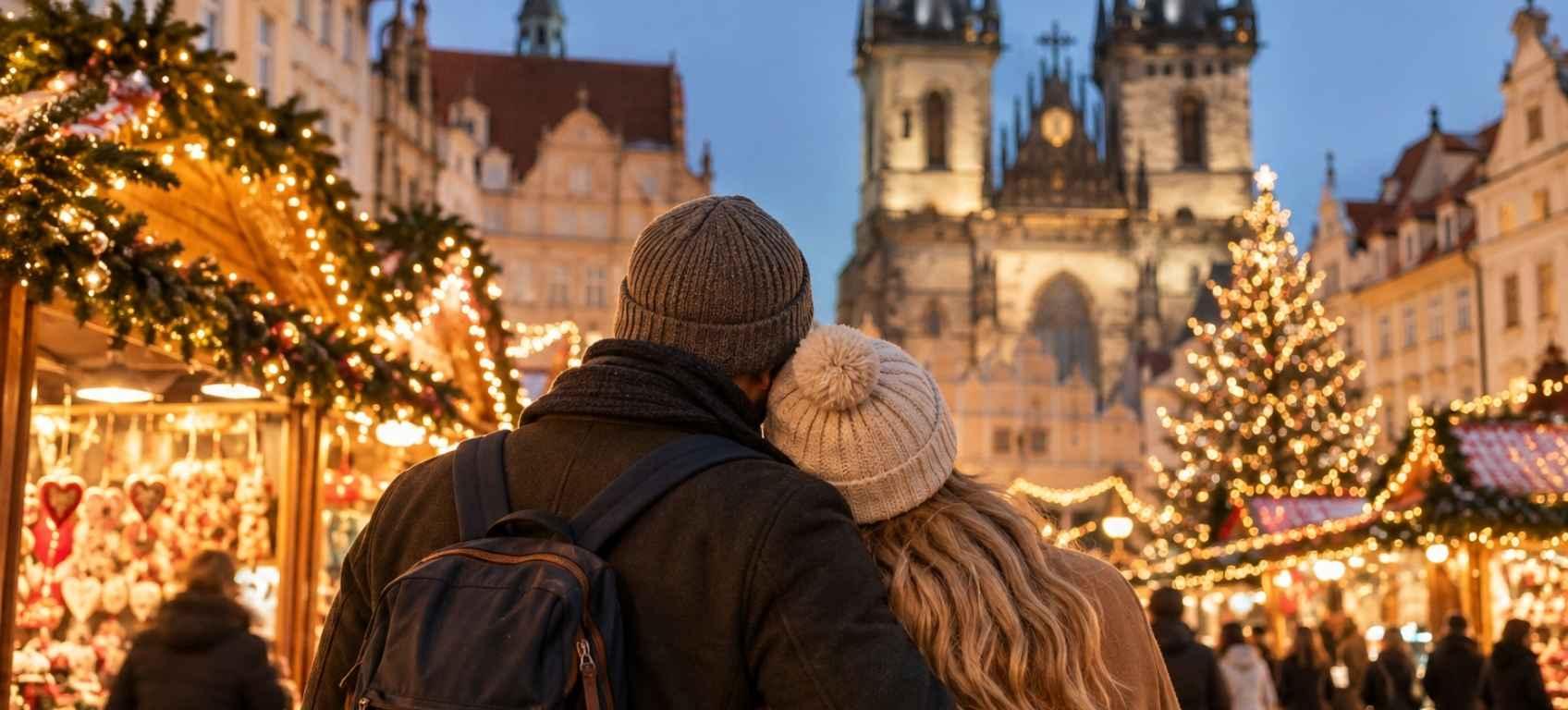


The Best Christmas Markets in Europe 2026: Cologne, Dresden & 5 More Ranked by Travelers
When you go matters almost as much as where. Get Europe's 7 best Christmas markets, ranked by travelers, plus the timing secrets that beat the crowds.
 by Amira Bula
The best Christmas markets in Europe are in Cologne, Dresden, Strasbourg, Nuremberg, Vienna, Colmar and Salzburg, based on what travelers who've visited a lot of them keep recommending.
Cologne is the overall favorite for atmosphere, but that popularity comes with crowds, and the same is true on weekends in Nuremberg and Colmar. That's why when you go matters almost as much as where you go.
And if your route crosses from Germany into France or Austria, a Europe eSIM from GigSky keeps your maps and train tickets working at every stop.
Which Christmas market fits your trip?
Each of these seven markets suits a different kind of traveler, and the best time to go changes from city to city.
| Rank | Market | Country | Best for | Best time to go |
|---|---|---|---|---|
| 1 | Cologne | Germany | First-timers who want atmosphere and variety | Earlier in the day |
| 2 | Dresden | Germany | Traditions, handmade products and history | During Advent, before Christmas |
| 3 | Strasbourg | France | A beautiful city with food, wine and day trips | Evening |
| 4 | Nuremberg | Germany | A classic German market in a historic city | A weekday |
| 5 | Vienna | Austria | Elegant markets plus museums and sights | Evening for lights, daytime for the city |
| 6 | Colmar | France | A storybook setting and an Alsace road-trip base | A weekday |
| 7 | Salzburg | Austria | A festive mood without heavy crowds | Outside the Krampus run |
1. Cologne, Germany: the best overall pick
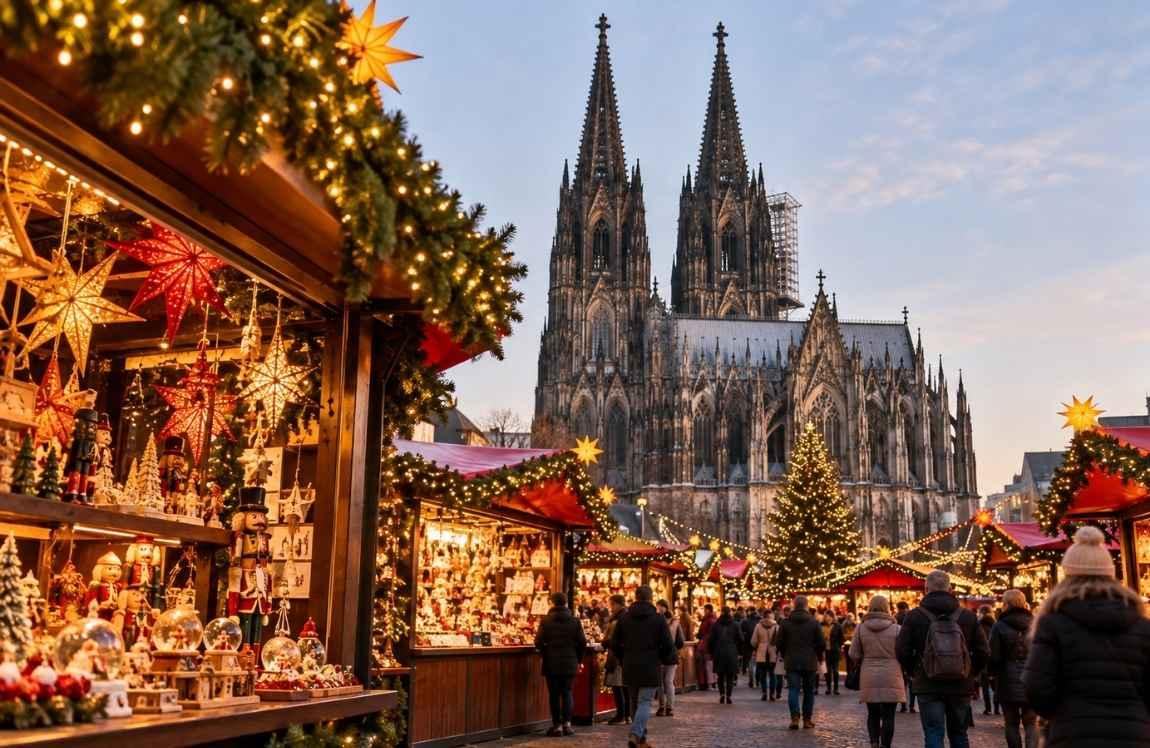
Cologne is the best overall choice because it combines strong theming, several separate markets and the Cathedral as a backdrop.
People who had already been to a lot of Christmas markets still put Cologne's among the best Christmas markets they'd seen.
Sometimes starting with Cologne can be a mistake, because every market after it feels like a letdown. Others call the atmosphere "pure magic" and leave it there.
The Cathedral helps a lot, giving the stalls a far more dramatic setting. Expect hot wine and some interesting food stands, spread across markets around the city rather than packed into one square.
Central Cologne gets very full, though. If crowds wear you down, this probably isn't your city. If you'd like a smaller option, there's a vegan market in Kalk.
Best for: First-time Christmas-market visitors who want maximum atmosphere, strong theming and variety.
Best time to go: Earlier in the day. The central markets get very busy later on.
2. Dresden, Germany: why do tradition lovers pick it?
Dresden is the pick for travelers who want Christmas-market tradition, since its market is often described as one of Germany's oldest and most significant, and one of the hardest to beat.
The city has several markets and museums, but the bigger draw sits just south of it. The Ore Mountains are known as THE German Christmas region, and many of the handmade products you'll find at Christmas markets in Germany come from there.
The season in the region includes miners' parades and celebrations inside historic mines.
Seiffen is the place for handmade wooden ornaments, and it pairs well with a Dresden stay.
Bautzen, about an hour away, has one of Germany's oldest markets too. Coming from Prague? Dresden is an easy two-hour train ride.
Best for: Travelers who care about traditions, handmade Christmas products and history.
Best time to go: During Advent and before Christmas itself, since many German markets close before the holiday.
3. Strasbourg, France: a market with a whole trip around it
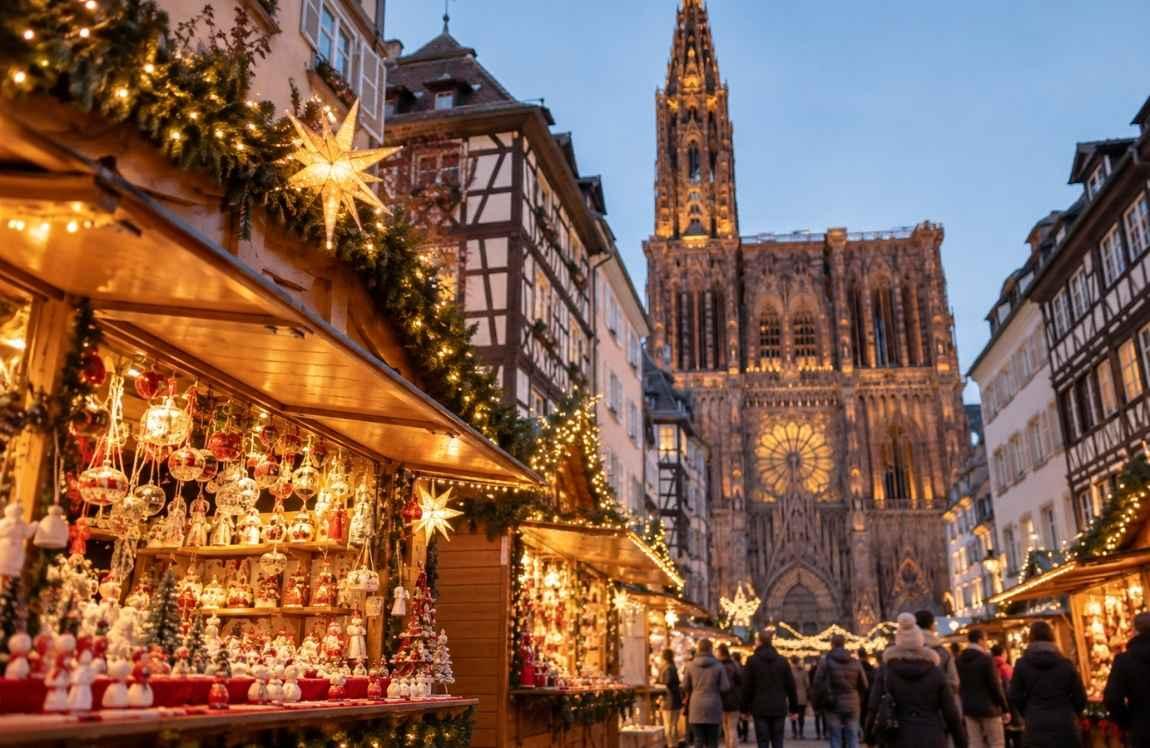
Strasbourg earns its spot near the top because the city is worth visiting even without the market, and the market itself keeps getting named alongside Dresden and Nuremberg as one of the best and oldest.
When a market is your only reason to visit a city, day two can feel long. Not here. Colmar is an easy train ride when you want a change of scenery, and the smaller Alsatian towns are close enough that you can keep one hotel and explore from there instead of repacking every other night.
Then there's the mulled wine, which travelers describe as "something to behold." If you're deciding which European Christmas fair to build a trip around, Strasbourg gives you more to do beyond the Christmas markets.
Best for: Travelers who want a Christmas trip with a beautiful city, food, wine and easy day trips.
Best time to go: Evening, when the festive lighting sets a much better mood than daylight.
How do you stay connected while visiting Christmas markets in more than one country?
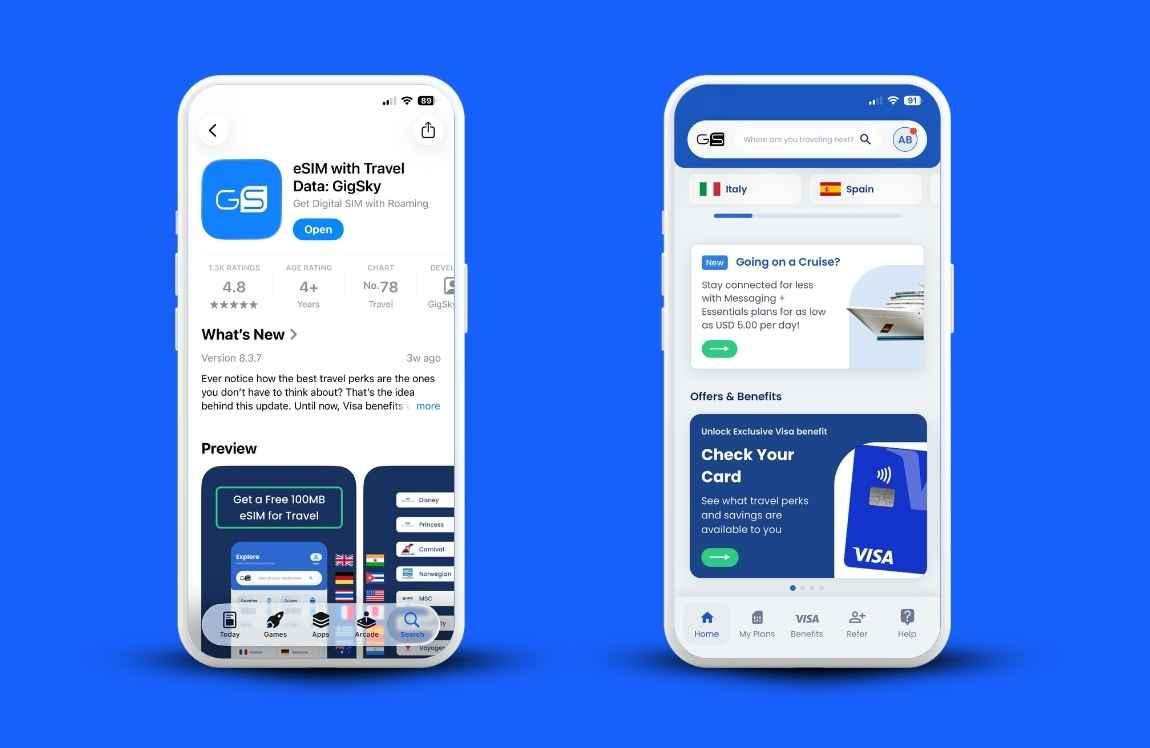
The easiest way to stay connected on a multi-country Christmas market trip is a Europe eSIM you install once and keep using as you cross borders.
GigSky's Europe coverage includes 41 countries, Germany, France and Austria among them, so the same eSIM works in Cologne, Strasbourg and Vienna.
A route through the best Christmas markets in Europe often covers three countries in one week, and a border crossing is a bad moment to be looking for Wi-Fi to pull up a train ticket.
GigSky is a mobile operator, not a reseller, so your phone connects to the strongest local network on its own and switches when it needs to.
You don't change any settings when you arrive. You install the eSIM once in the GigSky app, and it stays on your phone for the next trip.
You can try it before you pay. GigSky gives you up to 100MB of free data in European countries, with no card required.
If you have an eligible Visa card, tap the Visa banner in the app before you leave. You can get from 1 - 10 GB of free data in European countries, plus up to 7 days of free unlimited data in France.
4. Nuremberg, Germany: the classic first German market
Nuremberg is one of the great classic Christmas-market cities, and skipping it on a Christmas-market trip is almost unthinkable.
For a first visit to the Christmas markets in Germany, it's a strong start. The city is beautiful and full of history, so you're not there only for stalls and mulled wine.
Visitors find goods they rarely see at home, though a few admit markets start to feel alike after a while.
Order a Heißes Hugo mit Holunder. It's a hot white-wine drink and a nice change from the standard red.
The real warning is crowds. Weekends get extremely busy, and two or three full days purely for the market is more than most people need.
Best for: First-time visitors who want a classic German Christmas market plus a historic city.
Best time to go: A weekday. It's much more pleasant and less crowded.
5. Vienna, Austria: for when you're done with markets
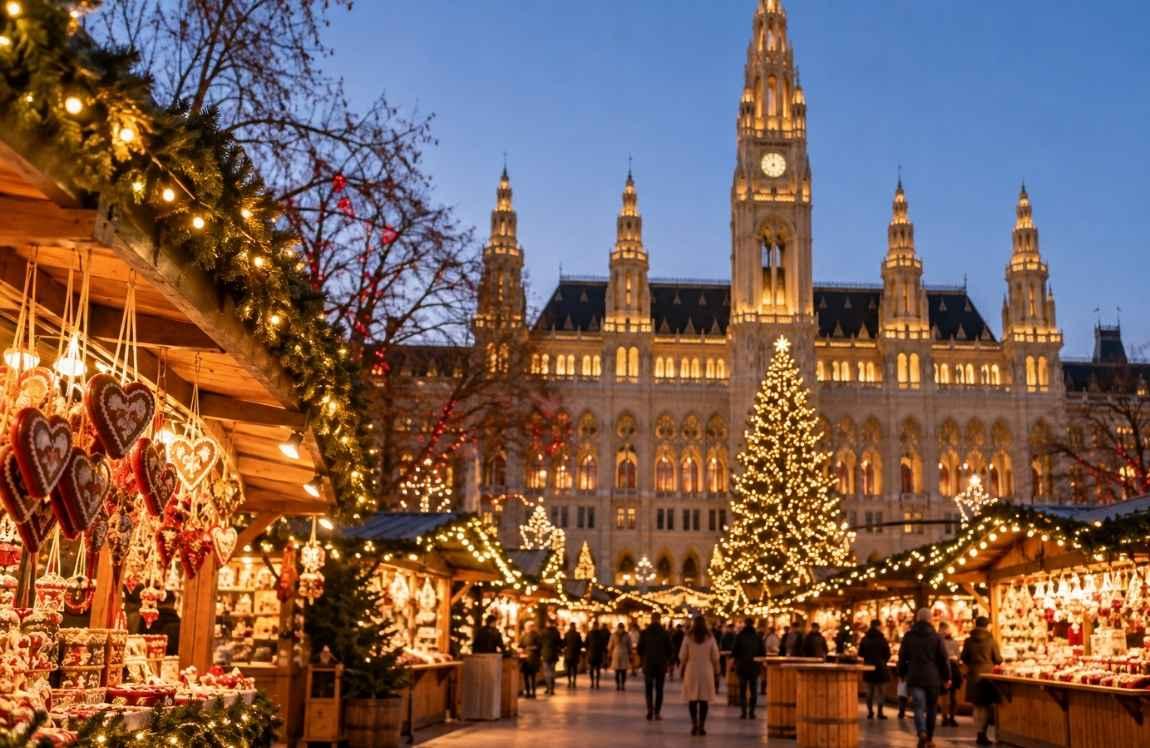
Vienna is one of the strongest all-around Christmas destinations because it pairs great markets with plenty to do when the days are short and cold.
Travelers rank it among the best, praising its chic feel, while the city still has plenty to offer once you’ve had your fill of the markets.
The market beside St. Stephen's Cathedral is the one people remember, mostly for its dramatic location, and the rest of the city adds several more.
People who'd done both also compared Vienna with Salzburg: a similar size and feel, but significantly more market variety in Vienna.
That variety is the reason to base yourself here. Any European Christmas fair can start to feel repetitive once you've seen the same mugs, candles and sausages a few times, and Vienna always gives you somewhere else to go.
Best for: Travelers who want elegant Christmas markets mixed with museums, sights and indoor activities.
Best time to go: Evening for the festive lights. Save the daytime for the rest of Vienna.
6. Colmar, France: the storybook setting, with weekend crowds
Colmar is one of the most beautiful Christmas-market destinations on this list, regularly paired with Strasbourg and described simply as "so, so beautiful."
It also makes a practical base for Alsace, especially with a car for Riquewihr, Strasbourg and the smaller towns. Travelers recommend it over Baden-Baden as a base for that reason.
The downside is popularity. Colmar gets incredibly busy on weekends, enough that avoiding Saturday and Sunday comes up as direct advice.
Go on a weekday, though, and you get the storybook, highly festive setting that keeps Colmar on lists of the best Christmas markets in Europe.
Best for: Travelers looking for a beautiful, storybook-style Christmas setting and an Alsace road-trip base.
Best time to go: A weekday. Skip the weekend if you can, because the crowds get intense.
7. Salzburg, Austria: the pick if crowds bother you
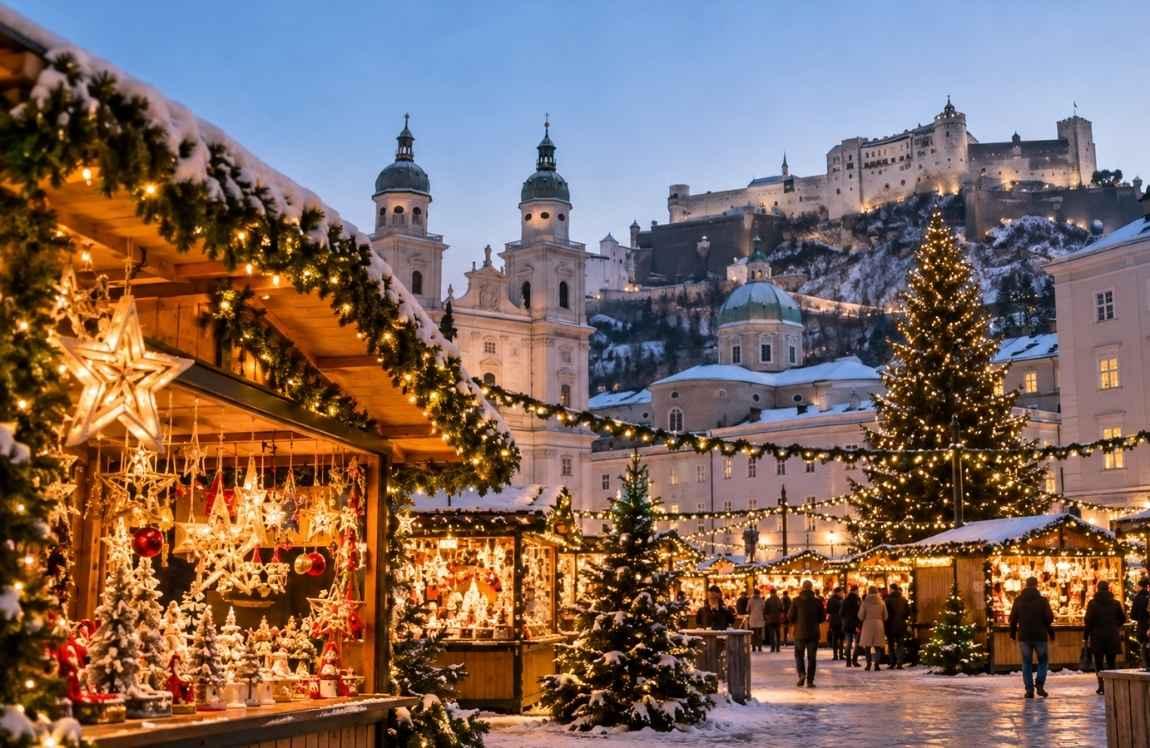
Salzburg is the best choice for a lively Christmas market where you can still move around comfortably.
Travelers compare it with Munich, where the crowds get so heavy you can barely walk. In Salzburg, you can wander from stall to stall without constantly rubbing shoulders with strangers. The one exception is the Krampus run, when crowds build up quickly as people gather to watch.
Salzburg has less market variety than Vienna. For many travelers, the easier pace is worth it.
Best for: People who love the Christmas atmosphere but dislike packed squares.
Best time to go: Outside the Krampus run if you want the most relaxed visit.
Frequently Asked Questions
Which Christmas market is best for first-time visitors?
Cologne is the best first pick for atmosphere and variety. Nuremberg is a strong alternative if you want a classic German market in a historic city.
When should you go to German Christmas markets?
Go during Advent and before Christmas itself, because many German markets close before the holiday. Weekdays are calmer in busy cities like Nuremberg.
What's the best European Christmas fair if you don't like crowds?
Salzburg. Travelers find you can move from stall to stall comfortably there, except during the Krampus run.
Do you need a different eSIM for each country?
No. GigSky's Europe eSIM includes 41 countries, so one eSIM works across Germany, France and Austria without reinstalling.
Recap: Planning a Trip to the Best Christmas Markets in Europe
- Cologne is the overall favorite for atmosphere. Go earlier in the day to beat the crowds.
- Dresden and the nearby Ore Mountains are where many German Christmas traditions and handmade products come from.
- Strasbourg and Colmar make a strong Alsace pairing, as long as you avoid Colmar on weekends.
- Nuremberg is a classic first German market, and a weekday visit is far more pleasant.
- Vienna gives you the most to do beyond the stalls, while Salzburg is the calmer choice outside the Krampus run.
- One GigSky eSIM covers your route across Europe, and eligible Visa cardholders can unlock free unlimited data in France.
%2520(27).jpg&w=3840&q=75)
%2520-%25202026-07-23T165641.302.jpg&w=3840&q=75)