
%2520(16).jpg&w=3840&q=75)


Where to Find the Real Spirit of Día de los Muertos Mexico City
The parade is dazzling, but the real Día de los Muertos magic happens 5 hours away. Find both, without blowing your budget.
 by Unknown Author
You've booked your flights for Día de los Muertos, but here's the twist: the famous parade didn't exist until 2016, and the real celebration happens 5 hours away in a lakeside town where this tradition started.
The best part? Splitting your time between both destinations costs less than you'd think.
This guide shows you exactly how to see the massive parade AND the authentic cemetery vigils, without the tourist markup that drains your budget before you arrive.
When is Día de los Muertos in Mexico?
Mexicans celebrate día de los Muertos on November 1st and 2nd, November 1st for children and November 2nd for adults.
In many places, like Pátzcuaro, families begin on October 31st with cemetery vigils.
Why Graves Become Dining Tables in Mexico
Most cultures view death as the end of the story. Mexico sees it as an ongoing relationship.
This perspective comes from ancient Mayan and Aztec beliefs that death was a passage to another realm.
There's a saying that captures the essence: "The dead live on in the stories we tell"
Everything you'll see during these two days, the elaborate altars, the foods carefully arranged, the photos surrounded by flowers, stems from the belief that spirits return home on November 1st and 2nd.
Families aren't just remembering their loved ones. They're hosting them for a yearly visit.
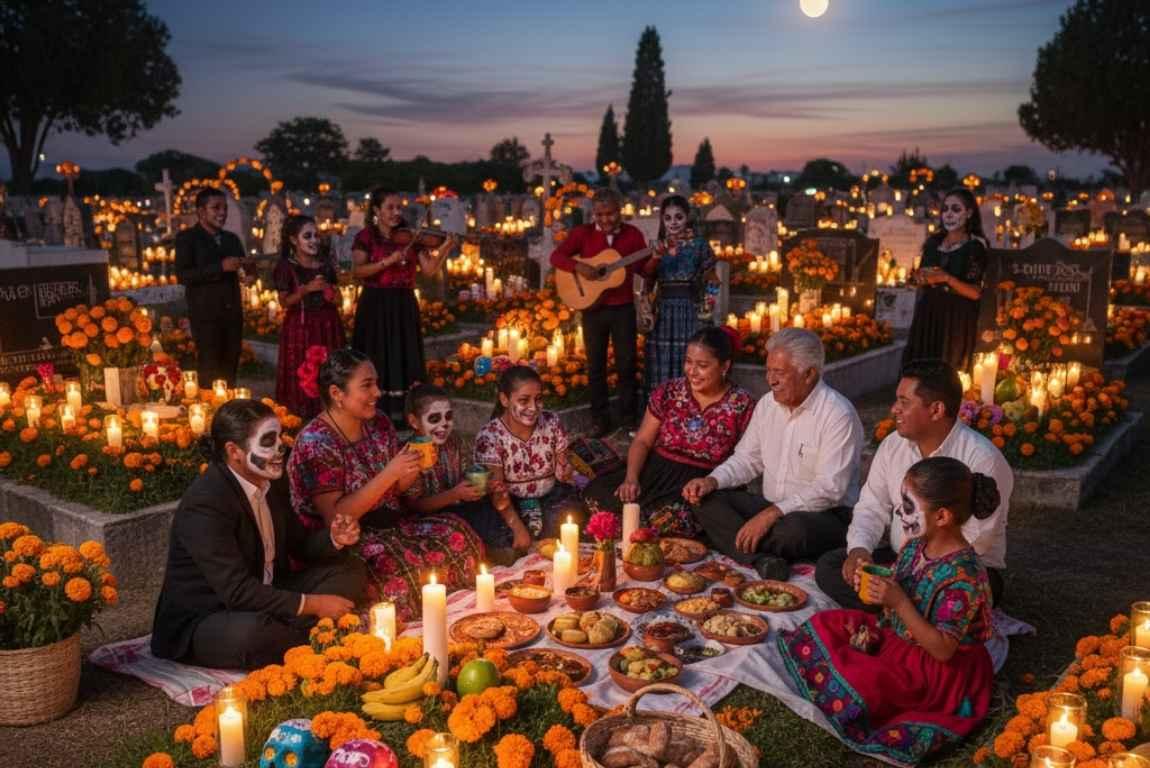
When you visit cemeteries, you'll see families having dinner beside graves, surrounded by candles and marigolds.
It might look unusual at first, but this is the heart of it all: treating departed family members like honored guests coming home, not distant memories to mourn.
The Mexico City Día de los Muertos Parade
The massive Día de los Muertos Mexico City parade takes over Paseo de la Reforma on November 2nd, starting at 2:00 PM and running until about 6:30 PM. It begins at Puerta de los Leones in Chapultepec Park and ends at the Zócalo.
But this parade didn't exist before 2016. The James Bond film Spectre featured a fictional Day of the Dead parade and Mexico City created a real version the following year.
Some people call it inauthentic, but it's become a genuine celebration that draws over a million people annually.
You'll see towering Catrinas (skeleton figures), floats, traditional dancers, and alebrijes, colorful spirit animals that float down the avenue.
Marigolds line the entire route. These aren't decorative; tradition says their bright color and distinct scent guide spirits back to the world of the living.
Get there at least two hours early if you want a decent view. The crowds pack in tight.
Wear comfortable shoes and bring water, you'll be standing for hours.
Pátzcuaro: The Origin of Día de los Muertos
Most travelers only go to Mexico City, but Pátzcuaro in Michoacán is the birthplace of these traditions.
This small town around Lake Pátzcuaro hosts the most authentic, spiritual celebrations in Mexico.
The Purépecha people have been celebrating here since pre-Hispanic times, and they consider the lake itself a gateway to the underworld.
Families spend entire nights in cemeteries, transforming them into candlelit spaces where the living dine with the dead.
The solemnity here contrasts sharply with Mexico City Día de los Muertos parade, this is where you witness the celebration's spiritual core.
Getting there requires planning. From Mexico City, you'll take a bus to Morelia (about 4 hours), then another bus to Pátzcuaro (1 hour). It's a journey, but worth it if you want the full experience.
The nearby island of Janitzio becomes a pilgrimage site during these days.
Boats decorated with candles ferry visitors across the lake, creating floating lights on the water.
The cemetery fills with elaborate offerings decorated with flowers, food, and personal belongings.
Fair warning: Janitzio gets absolutely packed. Ferry wait times can hit 2+ hours on November 1st, with 4+ hour waits for the return trip.
Many experienced travelers visit in the late afternoon and leave before sunset to avoid the worst crowds.
How to Split Your Time
If you can swing it, combine both destinations. Arrive in Mexico City around October 29th or 30th.
Head to Pátzcuaro for October 31st and November 1st to experience the traditional cemetery vigils. Return to Mexico City on November 2nd for the parade.
This requires tight coordination. The parade starts at 2:00 PM, so you'll need to leave Pátzcuaro early on November 2nd.
Book Pátzcuaro accommodations now if you haven't already. Hotels fill up months ahead. Morelia, about an hour away, offers backup options with better availability.
What All These Symbols Mean
Every altar contains specific elements:
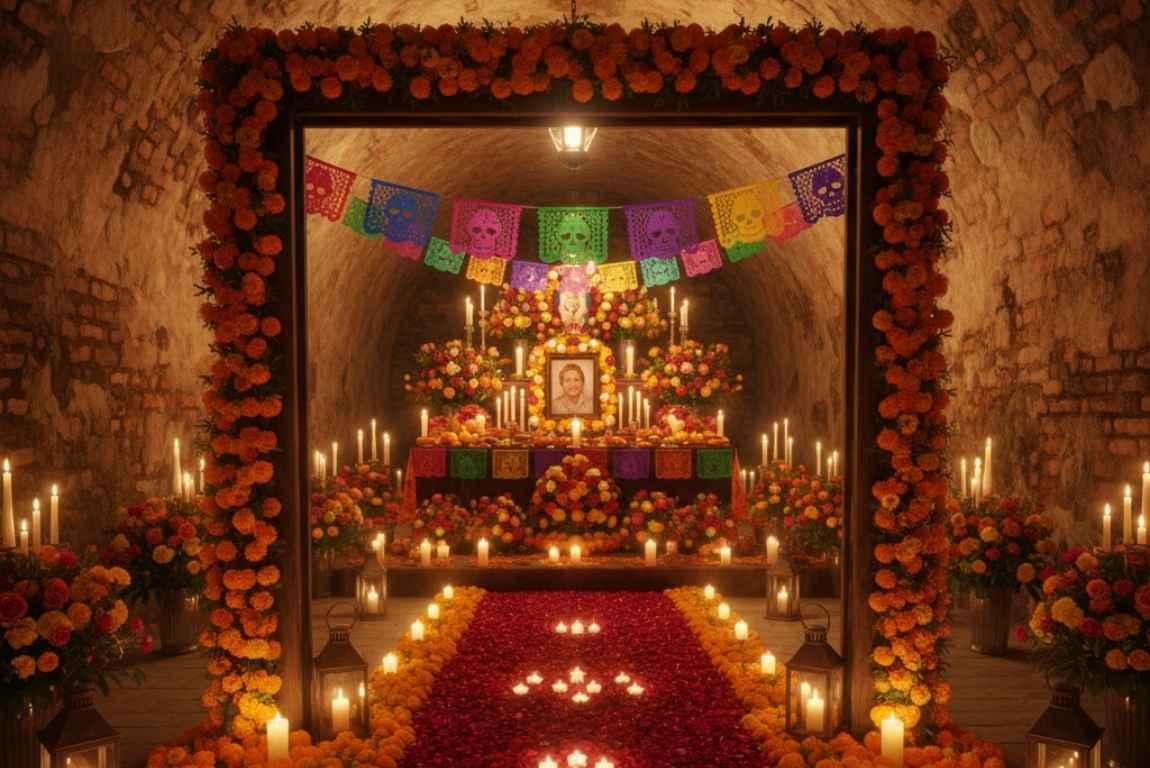
Cempasúchil flowers (marigolds) create paths from streets to doorways and from altar bases to photos. Their vibrant orange color and distinctive scent guide spirits home.
Pan de muerto (bread of the dead) appears everywhere in late October and early November. This sweet bread features dough shaped like bones and skulls on top. It tastes amazing, many travelers say it's a trip highlight. Bakeries make thousands of loaves just for this season.
Mexican skull Día de los Muertos decorations appear on altars and in markets in all sizes, some intricately painted with names. These sugar skulls represent death as a character in life's story, not something to fear. The Mexican skull Día de los Muertos tradition transforms mortality into art, colorful reminders that death is part of life's celebration.
Candles light graves and altars all night, serving both practical and symbolic purposes, guiding spirits back to their families.
Food and drink cover every altar. Families prepare the deceased's favorite meals, believing spirits consume the essence. After the celebration, families eat the physical food, the departed took what they needed.
How to Be a Respectful Visitor
You're a guest at someone else's sacred tradition. Here's how to get it right:
Stay quiet in cemeteries. These are intimate family moments. Families welcome respectful observers, but pushing in for photos or talking loudly ruins the atmosphere they've created.
Always ask permission before photographing people or their altars. Most families say yes if you show genuine interest. Some decline, respect that.
Dress appropriately. Skip the Halloween costumes or skeleton face paint unless you're in the parade where that fits. This celebration feels festive but centers on honoring the dead.
Keep distance during cemetery dinners unless invited closer. You can observe from nearby paths without crowding. When families invite you to learn about their traditions, accept graciously.
What to Eat
Beyond pan de muerto, look for:
Hot chocolate pairs perfectly with the bread. Mexican hot chocolate is richer than American versions, often spiced with cinnamon and whisked until frothy.
Tamales, mole, and pozole appear on altars and at gatherings. These labor-intensive dishes show effort and love for the deceased.
Atole, a warm corn-based drink, is another traditional beverage during these days.
Visit Mercado de Jamaica or Mercado de Coyoacán to see the full variety of seasonal offerings, elaborate sugar skulls, marigold bundles, and pre-made altar decorations.
Hacks for a Smooth Trip
Connectivity: Set up your international data plan before you leave. You'll need it for maps, checking event schedules, and booking rides, especially after the parade when everyone is trying to get back to their hotels.
Cash: Street vendors and small eateries near cemeteries usually only take cash. ATMs get harder to find in smaller towns, so it's best to withdraw enough pesos in Mexico City before heading to Michoacán.
Transportation: In Mexico City, Uber is reliable, though expect higher prices during parade hours. Once in Pátzcuaro, it's easier to have your hotel arrange taxis for you.
Recap: Día de los Muertos Mexico City Travel Guide
- What it is: Families host the dead, graves become dinner tables, marigolds and candles guide spirits home.
- Where to be: Mexico City for the giant parade (since 2016). Pátzcuaro to experience the authentic origin of this tradition.
- What to know: Book early, bring cash, expect Janitzio ferry crowds, get to the parade 2 hrs early.
- How to act: Be quiet, ask before photos, skip costumes, observe respectfully.