

.jpg&w=3840&q=75)


Why Every Traveler Needs a Virtual SIM Card Before Their Next Trip Abroad
From free trials to stress-free setup, see why eSIMs are the secret weapon every international traveler should pack first.
 by Amira Bula
Remember when traveling abroad meant hunting down a virtual SIM card the moment you landed: Tired, jet-lagged, and trying to explain yourself in another language?
You'd pay too much, sign confusing contracts, and hope you didn't lose your home SIM along the way.
The good news? You don't have to do that anymore.
Virtual SIM cards let you land connected, no stress, no surprises. And in this guide, you'll see how easy it is.
What's a Virtual SIM Card, Really?
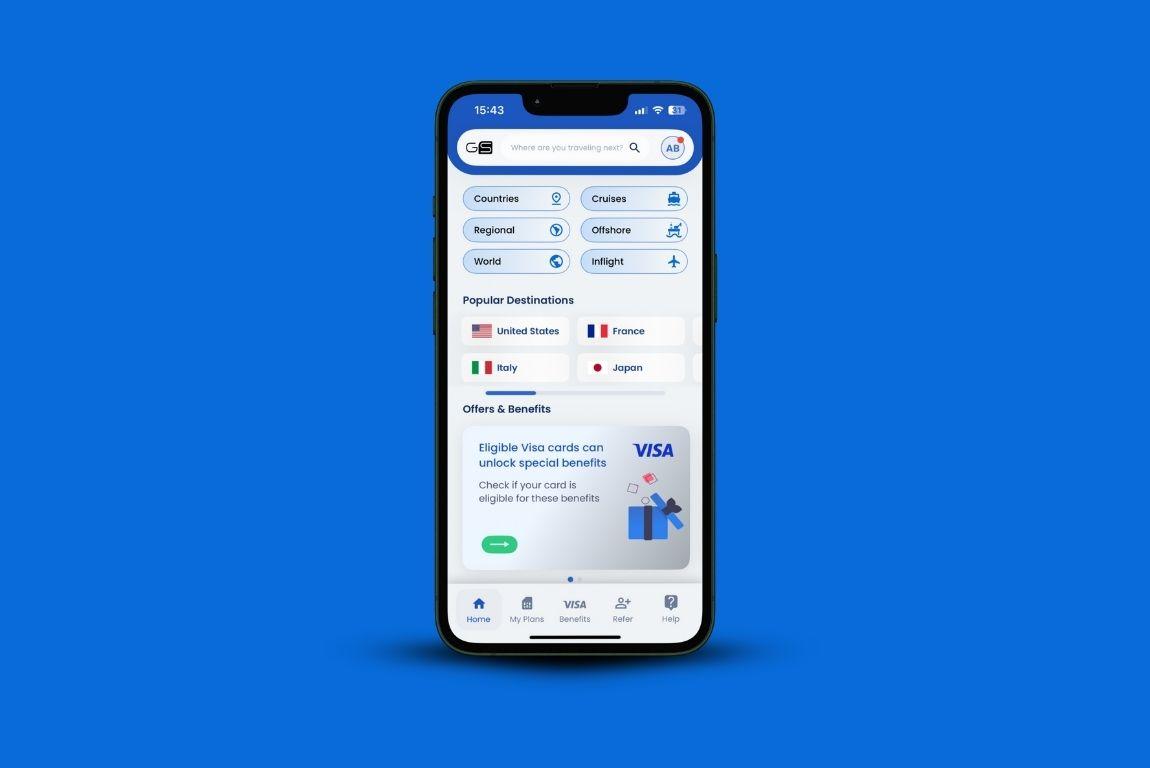
Think of a virtual sim card (also called an eSIM) as your regular SIM card's digital twin.
Instead of that tiny plastic chip you're used to, everything happens through software on your phone.
You download an app, follow a few setup steps, and your phone connects to networks abroad without you having to fumble with any physical parts.
The basic idea is simple: rather than hunting down and installing a physical SIM card in every country you visit, you download a digital version that does the same job.
If you have a newer phone, there's a good chance it's already designed for this.
Some newer models don't even have physical SIM card slots anymore.
Why Savvy Travelers Are Ditching Physical SIMs
Physical SIM cards have been the go-to for international travelers for years, but they come with some real headaches that become obvious once you're trying to stay connected across multiple countries.
When you travel internationally with a physical SIM, you're usually stuck with two choices: pay your home carrier's international roaming fees (which can easily hit $10+ per day), or track down a local SIM card once you arrive.
The local SIM route means finding a mobile store or airport kiosk, dealing with potential language barriers, figuring out local plan options, and physically swapping that tiny chip in your phone.
Plus, you need to keep track of your original SIM card and do this whole dance again in each new country.
Virtual SIM cards cut through this hassle by letting you handle everything before you travel.
You can research your options, compare prices, and set up your international connectivity from home, in your own language, with clear pricing, so you have data the moment you land.
One Digital SIM for Every Country You Visit
Digital SIM cards (eSIMs) solve several problems that frequent international travelers know all too well.
- Cost predictability is huge: Instead of worrying about surprise roaming charges or daily fees that add up fast, you buy exactly the data you need upfront. No bill shock, and you can track your usage through the provider's app.
- Multi-country trips become simpler: Instead of researching and buying local SIM cards in each destination, one eSIM can work across multiple countries. This is valuable for European trips where you visit several countries in a short timeframe.
You also don't risk losing your home country SIM card, and anyone who's tried to get a replacement SIM from their home carrier while traveling abroad knows that's a headache you want to avoid.
Free Virtual SIM Card Trials Compared
Several eSIM providers offer free trials, though the specifics vary quite a bit.
GigSky gives you 100MB free for 7 days across 125 countries, with no credit card required.
That's enough data to test signal quality, send messages, and use maps while you figure out if the service works for you.
If you have a Visa Infinite or Signature card and you're based in the US, Canada or anywhere in the Americas and the Caribbean, you're eligible for up to 3GB free for 15 days.
For European travel, GigSky currently offers 500MB at $0, essentially a free virtual SIM card option for testing.

Nomad offers 500MB free for one day across 48 destinations.
This can be helpful for getting online quickly when you first arrive, though the single-day limit means you'll need to decide fast whether to buy more data.
Airalo provides 1GB free, which sounds generous until you realize it's only available in 8 countries and expires after 24 hours.
If your destination is covered though, it's a solid virtual sim card free trial for short trips.
Other providers like Holafly, Ubigi, and Saily don't currently offer free trials, you'll need to pay upfront to test their services.
Getting Started with GigSky
Setting up a virtual SIM card with GigSky is straightforward once you know the basic steps.
- Make sure your device supports eSIM technology. Most phones from the past few years do, including iPhone XS and later models, Google Pixel 3 and newer, and Samsung Galaxy S20 series and up. You can check this in your phone's settings under cellular or mobile data options.
- Download the GigSky app from your device's app store. The interface is designed to be user-friendly, avoiding the technical jargon that makes most telecom apps confusing.
- You can start with their free 100MB plan to test the service without providing payment information.
Once installed, the eSIM stays on your phone permanently. For future trips, you can buy additional data plans through the app without reinstalling anything.
The same eSIM profile works across all supported countries.
When you arrive at your destination, your phone automatically connects to local networks.
This eliminates the need to manually select networks or adjust settings while you're navigating a new place.
Why Every International Traveler Needs an eSIM [Recap]

- When traveling abroad you don't need to hunt down SIM cards anymore. With virtual SIMs (eSIMs), you stay connected the moment you land.
- You set the virtual SIMs before your trip on your phone, in your language, with clear pricing.
- One eSIM works across different countries, so if your trip takes you through several countries in Europe, Asia or any continent, you stay connected without swapping cards.
- Costs are predictable, too. You choose the data you need, track usage in the app, and avoid hidden fees. Meanwhile, your regular SIM stays safely in your phone, no risk of losing it in the shuffle at the airport.
- With GigSky, you can test the service before committing. Every traveler gets 100MB free in more than 125 countries (no credit card required). Visa Infinite and Signature cardholders get up to 3GB more.
- All you need is a compatible phone (most newer phones are). Download the GigSky app, activate once, and reuse it for every trip ahead.