

%2520(30).jpg&w=3840&q=75)


The Most Reliable eSIM Egypt Option for 2026 Trips
Egypt’s booming for 2026, but staying connected is harder than it looks. Discover the eSIM travelers trust for real coverage across the country.
 by Amira Bula
Egypt is having a moment. More travelers than ever are booking trips to Cairo, Luxor, and the Red Sea coast, and if you've been paying attention to travel trends, you've probably noticed Egypt popping up everywhere in 2026.
But here's what nobody tells you until you're there: figuring out how to stay connected is stressful.
You land at Cairo International, you're jet-lagged, and suddenly you need to decide between searching for a local SIM card shop, dealing with your carrier's international roaming fees, or just winging it with spotty airport wifi.
There's a better option, and it's one that frequent travelers have been using for a while now.
An eSIM Egypt lets you skip the whole airport SIM card scramble entirely. You set it up before you leave home, and when you land, you're already connected.
Why Egypt Makes Connectivity More Complicated
Egypt isn't a small country, and the network situation varies wildly depending on where you are.
Central Cairo has solid coverage. Same with Luxor and the main tourist areas along the Nile.
But Egypt also has vast stretches of desert, remote archaeological sites, and coastal areas where coverage gets inconsistent fast.
Most eSIM Egypt providers are actually just resellers. They connect you to whatever network happens to be cheapest, which works fine until you leave the main cities.
Then you're stuck with a weak signal or no connection at all, right when you actually need Google Maps to figure out where you're going.
The GigSky eSIM Egypt works differently because they operate as a mobile network operator.
That's not just marketing language, it actually changes how the service performs.
Instead of locking you into one predetermined network, GigSky connects you to the strongest network available wherever you are.
In Egypt, that means Orange Egypt, and you'll get 4G or 5G depending on location.
This matters when you're navigating the backstreets of Islamic Cairo, visiting temples in remote areas outside Luxor, or taking that desert tour you booked.
Having reliable connectivity stops being about convenience and becomes about being able to move through the country confidently.
Setting This Up Takes About Five Minutes
The Egypt eSIM setup happens before your trip, ideally at least a day before you fly.
You want to do this while you still have reliable internet at home, not while you’re standing in an airport trying to figure it out.
Before you get started, take a moment to confirm that your phone actually supports eSIMs. Most newer phones do, but some older models don’t. Go to gigsky.com/device-compatibility to check, it only takes 30 seconds.
Your phone also needs to be unlocked from your carrier.
On iPhone, go to Settings > General > About and look for Carrier Lock. If it says “No SIM restrictions,” you’re good.
On Android, go to Settings > Connections > SIM manager. If you see an Add eSIM option, you’re unlocked. If your phone is locked, call your carrier before your trip and ask them to unlock it.
Once that’s done, download the GigSky app. Then take a moment to think about your actual travel plans, because the kind of trip you’re taking affects which plan makes the most sense.
If you're only going to Egypt, get the country plan. Simple.
But if Egypt is part of a bigger trip through Africa or the Middle East, then you want one of these regional plans instead. There are also cruise plans if Egypt is a port stop.
Once you've picked your plan and paid, tap "install on this device" and let the app handle the rest. The installation happens automatically.
When you land and turn your phone on, your GigSky Egypt eSIM just connects.
No settings to adjust, no network names to select, no standing around wondering why nothing's working.
How Much Data You'll Actually Use
Everyone asks this, and the honest answer is: it depends entirely on how you use your phone.
If you're someone who constantly scrolls social media, watches videos, and streams music, you're looking at 1GB per day. Heavy users who watch YouTube or Netflix will hit the higher end of that range pretty quickly.
Most travelers use their phones more practically though. Google Maps for navigation. Posting photos to Instagram. Checking email. Using WhatsApp to coordinate with travel companions or contact tour operators. That kind of usage runs about 500MB per day.
For a typical week to ten days in Egypt, most people end up using somewhere between 5GB and 10GB total.
That gives you plenty of room to navigate, communicate, look things up, and share your experience without constantly worrying about running out.
Here's what's useful: when you hit 80% of your data, the app notifies you.
You get time to decide whether you need to top up or if you're fine finishing the trip on what you have left.
If you do need more, you can top up right in the app with one tap. No wifi hunting, no complicated process.
What The eSIM in Egypt Costs
GigSky charges in US dollars, which makes budgeting straightforward. No hidden fees, no surprise taxes, no roaming charges. The price you see is what you pay.
Egypt Country Plan
| Data Amount | Validity | Price |
|---|---|---|
| 1 GB | 7 days | $10.99 |
| 3 GB | 15 days | $25.49 |
| 5 GB | 30 days | $42.07 |
| 10 GB | 30 days | $76.49 |
This plan works perfectly if Egypt is your only destination.
If you're traveling to multiple countries in the Middle East, the regional plan covers Bahrain, Egypt, Israel, Jordan, Kuwait, Oman, Palestine, Qatar, and Saudi Arabia.
There's a free trial: 100MB for seven days, no credit card required. It's a limited-time offer, but it lets you test the service before paying for anything.
Middle East Regional Plan
| Data Amount | Validity | Price |
|---|---|---|
| 100 MB | 7 days | $0 |
| 1 GB | 7 days | $10.99 |
| 3 GB | 15 days | $25.49 |
| 5 GB | 30 days | $45.04 |
| 10 GB | 30 days | $80.74 |
For a broader African journey, the Africa regional plan covers Egypt plus 33 other countries including South Africa, Kenya, Morocco, and Tanzania.
It's actually cheaper than the Middle East plan.
Africa Regional Plan
| Data Amount | Validity | Price |
|---|---|---|
| 1 GB | 7 days | $10.49 |
| 3 GB | 15 days | $22.52 |
| 5 GB | 30 days | $36.54 |
| 10 GB | 30 days | $62.04 |
If you're taking a cruise that stops in Egypt, there are two cruise plans.
Cruise + Middle East covers ten countries in the region. Cruise + World extends to over 100 countries, which makes sense for longer cruises with multiple international stops.
Cruise plans cost more because they include maritime coverage, not just land-based networks.
Did You Know You Can Get 3GB Free in Egypt?
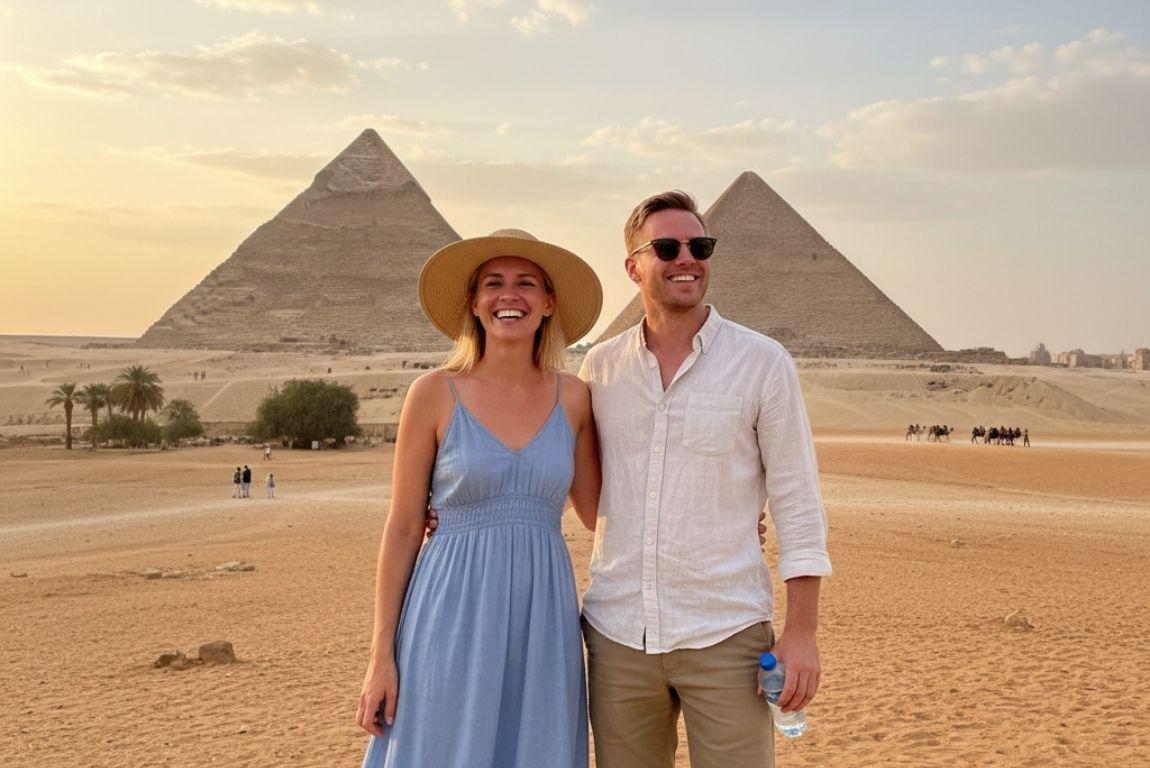
GigSky has a partnership with Visa that most people don't know exists, and Egypt qualifies as one of the destinations where you can use it.
If you have a Visa Infinite or Signature card issued anywhere in the Americas—US, Canada, Latin America, or the Caribbean—you're eligible for benefits that include 20-30% off all plans plus free data.
Most participating countries give you 3GB free for 15 days. Canadian Visa Infinite cardholders get 1GB free for 15 days. The bank doesn't matter. Chase, Bank of America, Bancolombia in Colombia, or Caixa in Brazil. As long as the card has the Visa Infinite or Signature logo, you're eligible.
This is a generous free trial. You can test the GigSky eSIM in Egypt, see how it performs for you, and decide whether you want to keep using it for future trips.
Don't Try to Keep Your Regular Number Active
Technically you can keep your US number active for calls and texts while using the eSIM for data. But here's the thing: don't do this.
These eSIMs are designed for data connectivity. If you start making calls or sending SMS through your regular carrier while abroad, you're going to get hit with roaming charges that completely defeat the purpose of getting an eSIM in the first place.
Use WhatsApp, iMessage, or Signal instead. Everything runs over your data connection, costs stay predictable, and you don't come home to a surprising phone bill.
You can also use hotspot and tethering with your GigSky data if you need to connect a laptop or share your connection with other travelers.
Coverage That Reaches Every Corner of Egypt
GigSky connects to Orange Egypt's network, which means you get coverage across the entire country, not just in tourist zones.
Whether you're in central Cairo, exploring temples in Luxor, walking along the Nile, or taking that desert excursion everyone says you have to do, you'll have connectivity.
The connection works in remote areas too, which is something most reseller eSIMs struggle with.
When you're visiting Abu Simbel or exploring coastal areas along the Red Sea, you're still connected.
If you're taking a Nile cruise, GigSky even has specialized cruise plans that work both on the water and at every port stop.
The speeds are solid. 4G in most places, 5G in major cities depending on exact location.
Fast enough for everything you need—navigation, communication, looking things up, sharing photos and videos.
The Reality of Using the GigSky eSIM
Here's what's nice about GigSky: once it's set up, you basically forget about it.
The eSIM connects automatically when you land. You don't need to remember to turn anything on or switch to a specific network. It just works.
The one time you interact with it is when you get that 80% notification.
At that point you decide whether to top up or coast on what you have left.
Topping up takes one tap in the app. You can also buy a new plan if that makes more sense for your situation.
Because you install the eSIM once and it stays on your phone, you can reuse it for any future GigSky plan anywhere in the world.
If you travel internationally even semi-regularly, you set this up once and you're done.
Next trip to anywhere GigSky covers, you just buy a new plan and go.
Why Your Egypt Trip Deserves Better Connectivity
Egypt is trending for good reason. The country offers experiences you can't get anywhere else, and right now it feels like the timing is right to visit.
But practical logistics matter, and figuring out connectivity is one of those things that either makes your trip smoother or adds unnecessary stress.
GigSky's approach works because they're a mobile network operator, not a reseller.
You get reliable coverage across Egypt, from Cairo to Luxor to remote desert areas. The setup is genuinely simple. The pricing is transparent. If you have an eligible Visa card, you can test it for free before paying anything.
Once you're there, the automatic connection and consistent reliability mean you can focus on experiencing Egypt instead of troubleshooting technology.
Whether you're standing in front of the Sphinx at dawn, bargaining in a Cairo market, or watching the Nile slide past from a boat at sunset, you'll have the connectivity you need to navigate, communicate, and share the journey.
When it comes to finding the best eSIM for Egypt, GigSky delivers on reliability, coverage, and ease of use.
For travelers looking for an eSIM in Egypt that works from the moment they land to the moment they leave, this is the solution that makes sense.
Recap: The GigSky eSIM for Egypt
- Set up before you go: Install your eSIM at least one day before departure while you have internet at home. Check phone compatibility at gigsky.com/device-compatibility and make sure your phone is unlocked.
- Choose the plan that matches your trip: Country plan for Egypt only, Middle East regional for multiple countries in the region, Africa regional for broader travel, or cruise plans if Egypt is part of a cruise itinerary.
- Plan for 5-10GB: if you're traveling for a week to ten days and using your phone for navigation, photos, messaging, and occasional browsing.
- Network quality: GigSky connects to Orange Egypt with 4G or 5G speeds, coverage works across tourist areas and remote regions.
- Transparent pricing: Pay in US dollars with no hidden fees, no surprise taxes, no roaming charges beyond the plan price.
- Free trial available: Visa Infinite or Signature cardholders from the Americas get 20-30% off plus free data to test the service in Egypt.
- Use data for everything: WhatsApp, iMessage, and Signal work over your data connection instead of triggering roaming charges for calls and texts.
- Easy top-ups: App notifies you at 80% data usage, lets you add more with one tap if needed.
- Automatic connection: The GigSky eSIM connects when you land with no manual setup required, and works immediately.