
%2520-%25202026-06-11T134658.725.jpg&w=3840&q=75)


Backpacking Europe in 2026: How to Build a Route You Won't Regret by Week Two
Most backpackers plan too many stops and regret it by week two. See how to build a Europe itinerary that works in real life.
 by Amira Bula
Most people spend more time building their route for backpacking across Europe than they'll ever spend on any single stretch of the trip.
Fourteen tabs open, three different Reddit threads, a color-coded spreadsheet someone made in 2022 that you're not sure still applies.
And then they leave for six weeks and realize by day ten that the route made way more sense on paper than it does in real life.
That gap between the plan and the trip is where most first-timers get into trouble. Not because they chose the wrong cities.
Because they didn't account for what it feels like to pack and move every three days while also trying to see things.
This guide is about the logistics of a Europe backpacking trip: how to build a route that holds up, what getting around costs and takes, where people usually misjudge their pace, and a few stops worth adding if you have room.
One practical note before you get into it: the GigSky eSIM covers 42 European countries and has free trials in the app, which is worth knowing now rather than when you're at baggage claim.
The City Count Problem
14 cities in 6 weeks sounds like a lot when you're planning. It's even more when you're living it.
The thing people underestimate when backpacking around Europe isn't the travel time itself. It's the half-day you lose arriving, getting oriented, finding the hostel, figuring out the transit system.
And then the morning you lose leaving. So a three-night stay in a city gives you maybe a day and a half of actual presence. That's fine for somewhere you're passing through. It's not much if you care about the place.
A 6-week trip with 8 stops is a different experience than the same trip with 13.
Fewer transitions, more time where you start to feel like you know a neighborhood, can go back to a place you liked the first day.
Some of the best parts of backpacking Europe happen on the third or fourth day in a city, when you're not running a checklist anymore.
Eight to ten stops for six weeks is about where most experienced backpackers land in retrospect. Not because it's a rule, but because that's what they say they'd do again if they were starting over.
The Classic Route vs. Going East: What Makes Sense in 2026
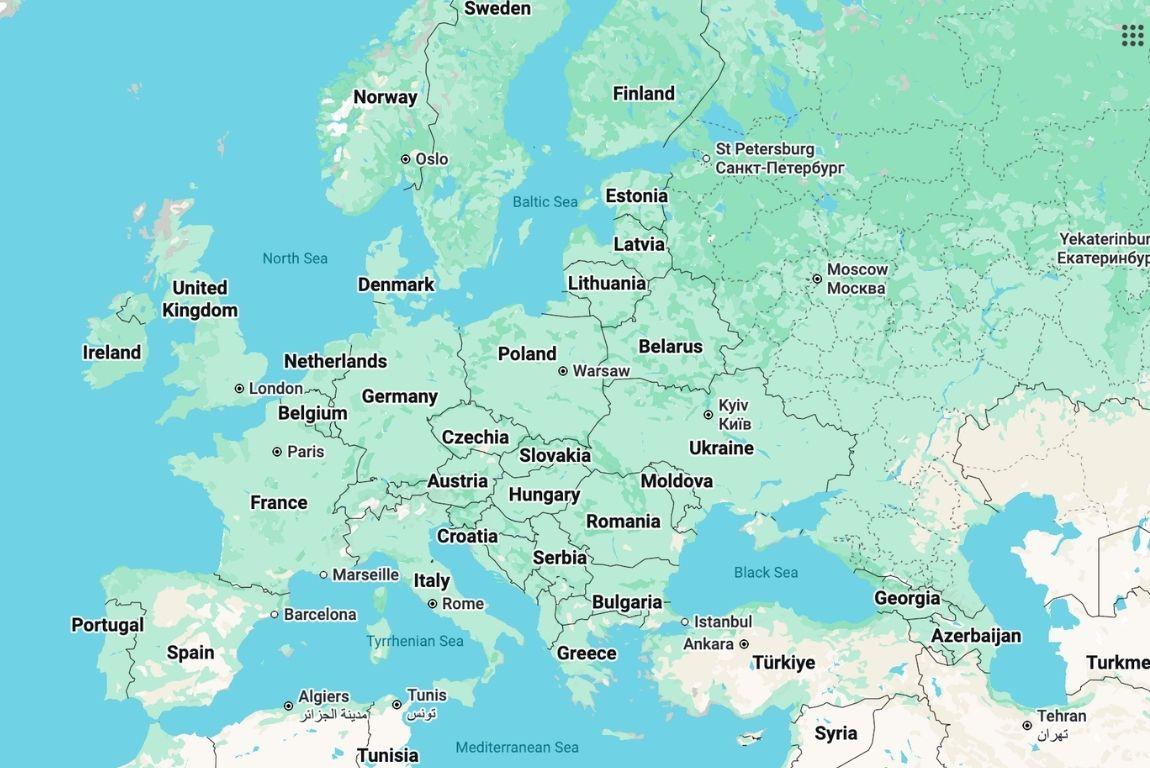
The western loop, Amsterdam to Paris to Barcelona to Italy to Prague to Budapest, is popular with first-timers backpacking Europe because it works. Not perfectly, but well enough.
Hostels are social, trains connect reliably, you're never far from somewhere you recognize. For a first trip, that's useful.
The problem in summer 2026 is that parts of that route have tipped past the point where crowds become something you manage and into something you fight.
Venice in July is a specific kind of unpleasantness that has nothing to do with Venice and everything to do with how many people are there.
The Cinque Terre trail requires a reservation now. Major Paris museums book out days ahead.
None of that makes the western loop a mistake. It means visiting those places differently.
Earlier in the day, later in the season if you have flexibility, with less of your trip hinging on a single must-see that might disappoint you.
Eastern Europe has been earning its reputation among people backpacking across Europe for a few years now, not as a secret but as a genuine alternative.
Ljubljana and Lake Bled in Slovenia cost less than comparable spots in Austria. Kotor in Montenegro pulls off what Dubrovnik used to before cruise ship traffic changed the math.
Olomouc in the Czech Republic has the same kind of preserved old town as Prague but about a tenth of the foot traffic.
Most good first-trip routes end up somewhere in the middle. A few anchor cities from the classic circuit where the reputation is earned, one or two eastern stops where you actually feel like you're not on a conveyor belt. That combination tends to travel well.
Eurail or Point-To-Point? The Honest Answer
The 15-day Eurail Global Pass for an adult in second class runs around 553 euros in 2026. That number alone doesn't tell you much.
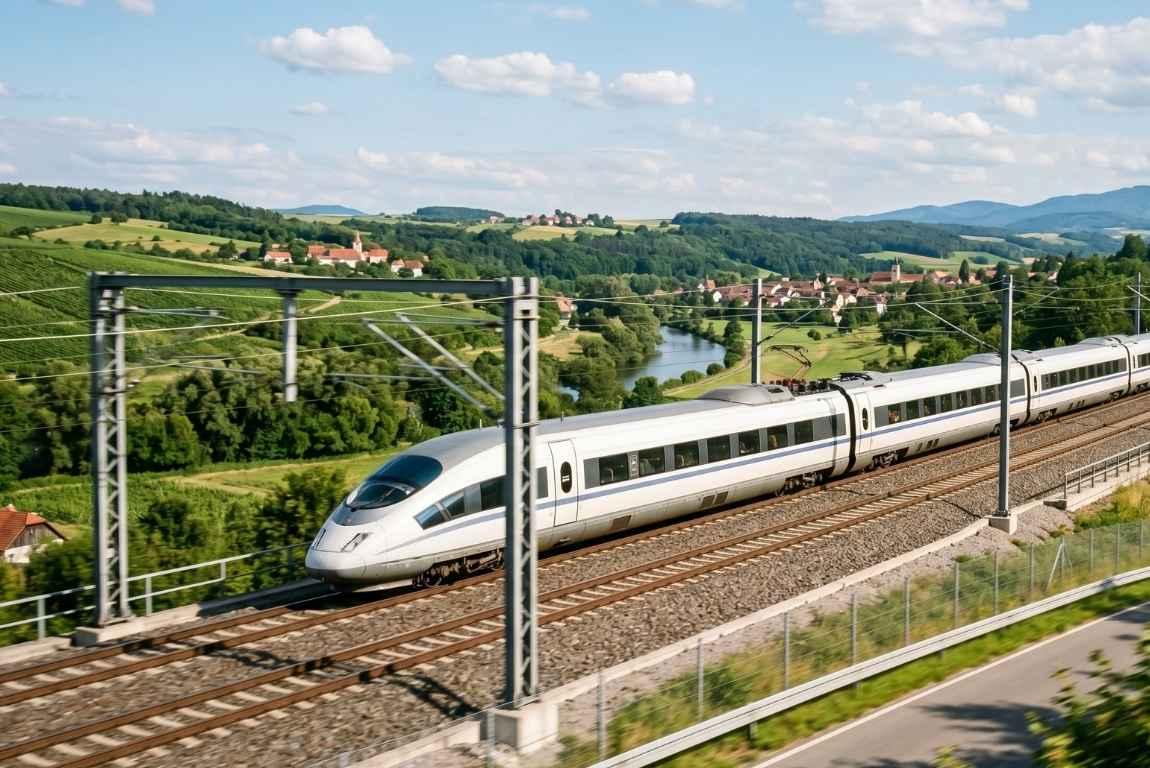
What matters is the reservations. High-speed trains in France, Spain, and Italy require a mandatory seat reservation on top of the pass.
Usually 10 to 15 euros per leg, sometimes higher on popular summer routes.
A pass covering 10 travel days with eight or nine high-speed legs doesn't look as clean by the end of it. That's not a reason to avoid a pass, but it's the math people tend to skip.
Point-to-point tickets work well when your dates are fixed and you're booking far enough ahead.
DB saver fares between major cities can run 20 to 50 euros. SNCF and Renfe run similar discounts.
Book in May for July travel and the prices look reasonable. Wait until late June and you're paying closer to walk-up rates.
Most people backpacking across Europe end up using a mix anyway. A shorter pass for the legs where they want flexibility, direct bookings for the routes where dates are firm.
That's not a cop-out answer; that's genuinely what tends to work.
One thing worth being honest about: Trainline and Rome2Rio are good for planning but the cheapest fares come from booking directly through the national rail sites. DB for Germany, SNCF for France, Renfe for Spain.
Buses and Budget Flights: Where They Fit
FlixBus has expanded enough across Europe that it's now a real option rather than a last resort.
For anyone backpacking Europe on a tight budget, overnight buses from Prague to Krakow or Berlin to Amsterdam are cheap and save you a night's accommodation cost. Sleep quality is what you'd expect from a bus seat.
Budget airlines fill a different gap, the routes where the train would eat most of a day and you'd rather just get there.
Ryanair and easyJet between them cover most of the useful short-haul connections. The baggage situation is where people get tripped up.
Both have strict carry-on size rules and both charge for checked bags. A 45-liter backpack usually qualifies as cabin luggage. A 60-liter bag almost certainly won't on Ryanair. Check the actual measurements before assuming.
For getting around within cities, Google Maps works across most of Western Europe without issues.
Real-time transit data in some Eastern European cities can lag, so treat posted bus schedules with some skepticism and build a little buffer.
What Things Cost This Summer
A one-number daily budget for a Europe backpacking trip is not that useful because the regional variation is too wide. A rough framework by region:
Western and Northern Europe, meaning Amsterdam, Paris, Copenhagen, runs about 90 to 110 euros per day for a hostel dorm, two to three meals ranging from street food to one sit-down, and one paid activity or attraction.
Central Europe, Prague, Budapest, Krakow, comes in at 50 to 70 euros for the same standard of day. Eastern Europe and the Balkans sit below that, often 40 to 55 euros with accommodation included.
The thing that surprises people isn't usually accommodation. It's activities. Museum entry in Paris runs 15 to 20 euros per site.
Major Italian attractions have added booking fees on top of ticket prices. Festivals can add 50 euros to a single evening without feeling like an indulgence.
Building a weekly buffer of 50 to 100 euros for unplanned things makes the trip feel less like a spreadsheet.
Connectivity Across 42 Countries on One eSIM

Most people don't think about how they're going to stay connected while backpacking across Europe until they need data and don't have it.
Standing in a train station you've never been to, trying to pull up directions, phone doing nothing.
The GigSky eSIM covers 42 European countries on a single plan. Because GigSky is a mobile operator rather than a reseller, the app auto-connects to the strongest local network when you arrive somewhere new.
You don't manually activate anything or switch settings at borders. It just works when you land.
If you haven't used it before, there are free trials available in the app ranging from 500MB to up to 5GB depending on eligibility, no credit card required.
The Visa Destinations benefit through eligible Visa cards adds complimentary data for the UK and France specifically, which covers two of the stops that show up on most European itineraries. You can check what's available in the app before you leave.
You install the eSIM once and reuse it on future trips. For a multi-country route, that's worth knowing before you're setting it up at the airport.
The 40-Liter Backpack Question
Ask anyone who's spent a summer backpacking Europe and they'll land at the same number eventually. Forty to fifty liters. Not because of some principled minimalism, but because they tried bigger and regretted it.
European train stations are not luggage-friendly environments. Stairs, narrow corridors, overhead racks with a maximum depth of maybe 30 centimeters.
A 70-liter bag becomes a problem quickly. Budget airlines are stricter. Hostel storage lockers often have size limits.
The things people consistently bring too much of: shoes, more than five days of clothes, a full toiletry kit.
The things that earn their weight: a compact rain layer, a power bank that can charge your phone twice, a universal adapter. European outlets vary between countries and you'll need the adapter from day one.
Frame and hip belt distribution matters more than people expect on a long travel day.
Soft duffel-style bags are comfortable until about hour two of a transit day. After that the shoulder load adds up fast.
A Few Stops People Skip and Shouldn’t
These stops usually don't make it onto most first-trip lists because they're not in the same conversation as Paris or Rome.
Ghent in Belgium sits between Brussels and Bruges and gets a fraction of the visitors either city does.
The medieval canal area is well-preserved, the food is better than Bruges, and it works as a day trip from either city if you're short on nights.
Matera in southern Italy is one of the oldest continuously inhabited settlements in the world.
Getting there takes effort, overnight train from Rome or Naples, and it needs two nights to make sense. Nothing about it looks like anywhere else in Europe.
Kotor in Montenegro is doing what Dubrovnik used to do before it became a cruise town.
Walled old city, mountains directly behind it, noticeably cheaper than anywhere in Croatia.
It doesn't connect easily to the rest of a western Europe route, which is exactly why most people skip it. But if you're already in the Balkans it's worth the detour.
Ljubljana tends to come up in conversations about backpacking Europe and the reputation is earned.
Small enough to cover on foot, affordable by western European standards, and a good base for Lake Bled. The lake is the kind of mountain scenery that justifies its reputation without requiring any effort to appreciate.
ETIAS: The One Admin Thing You Need to Do Before You Go
If your passport currently lets you enter Schengen countries without a visa, that's changing in late 2026.
ETIAS, the European Travel Information and Authorisation System, will require pre-authorization for most non-EU travelers including Americans, Canadians, and Australians.
The application is online, takes about ten minutes, costs around 7 euros, and is valid for three years or until your passport expires.
Most approvals come through quickly but the official guidance allows up to 30 days. The official site is travel-europe.europa.eu.
Check the entry requirements for every country on your route separately. ETIAS covers Schengen, but not every country you might visit is in Schengen.
A Few Things Worth Keeping From This
The most common regret from first-trip backpackers isn't where they went. It's how fast they moved. Build the route with that in mind.
Six to ten stops in six to eight weeks is the range where most people say they got it right in retrospect.
The classic western loop still works. Crowds in July at Venice and Barcelona reward early morning visits and advance booking.
Eurail passes favor flexibility; advance point-to-point bookings favor savings. Most good itineraries use both.
Daily budgets run 40 to 55 euros in Eastern Europe and 90 to 110 euros in Western/Northern Europe, not counting activities.
Pack 40 to 50 liters. Check your backpack measurements against the budget airline you're actually flying before you leave.
ETIAS authorization is required for most non-EU travelers entering Schengen in late 2026. Apply at travel-europe.europa.eu.
The GigSky Europe eSIM covers 42 European countries on one plan, auto-connects on arrival, and has free trials in the app.
The preparation matters. And once you're there, it matters a lot less than you thought it would.