

%2520-%25202026-07-09T153136.029.jpg&w=3840&q=75)


How Much Data Do I Need for 2 Weeks in Europe?
Wondering how much data you need for two weeks in Europe? Real usage numbers, free trial options, and how to avoid running dry abroad.
 by Amira Bula
Most travelers use somewhere between 4GB and 7GB a week once maps, messaging, and a little social media scrolling get added up.
That puts a typical two-week Europe trip in the 8GB to 14GB range. Light users who lean on hotel WiFi can get by on half that.
Heavy streamers, video callers, and constant posters should plan closer to 15GB or more.
If you'd rather not keep track of your data throughout the trip, an unlimited plan for the full length of your stay is the simplest option.
The real number comes down to habits, not the destination. If you still aren't sure how much data do I need, GigSky's free eSIM trial lets you test your real usage on day one, no card required.
What actually drives your data use in Europe
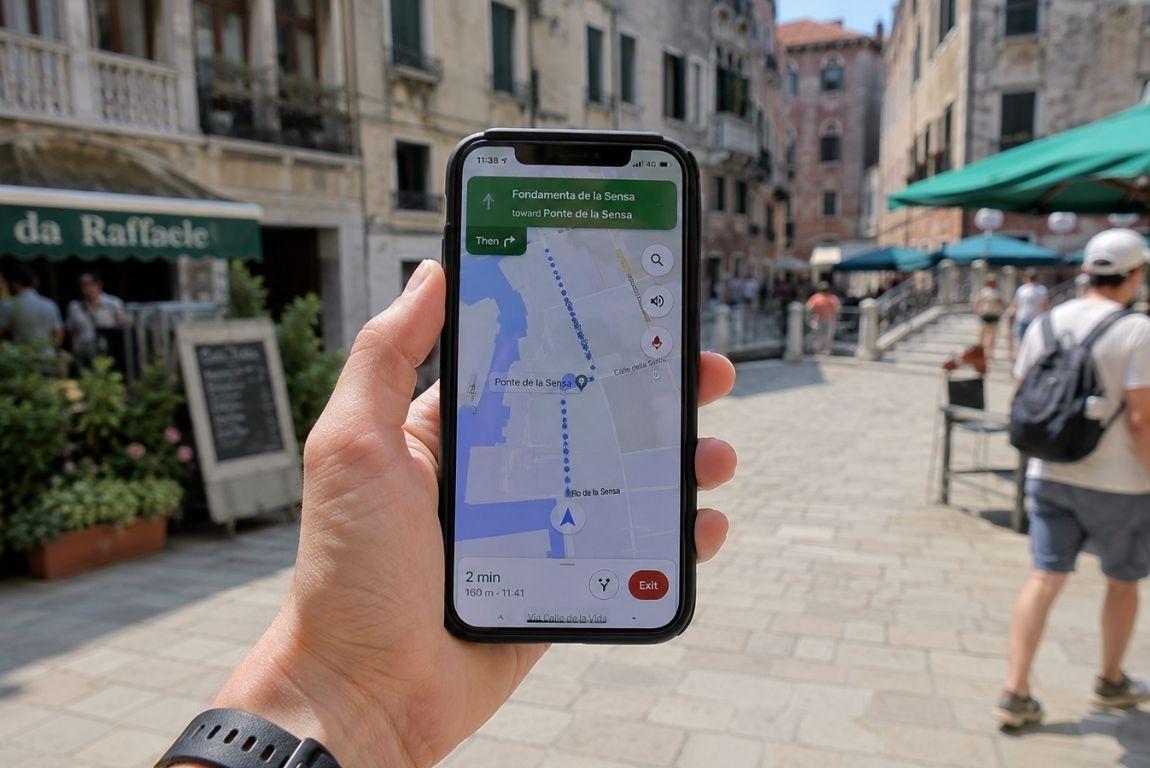
Three things decide how much data disappears on a two-week trip: how much you navigate, how much WiFi you stumble into, and how often you stream or video call.
Navigation is the quiet one. Google Maps running in the background while you walk from the hotel to a museum doesn't feel like it's using much, but it adds up over ten or twelve walking days.
WiFi availability swings wildly depending on where you are. Hotels are usually solid. High-speed trains like the Eurostar or the TGV can be hit or miss, especially mid-tunnel or between stations.
Smaller towns and rural stretches, think the Scottish Highlands or a hill town in Tuscany, tend to have the weakest signal of the whole trip.
That's also where a mobile operator model helps, since it connects to whichever local network is strongest instead of locking you to one carrier.
What data do I need on my phone for maps, messages, and streaming?
Navigation is the smallest drain per hour but the most constant one. Streaming video is the opposite: short bursts that eat a lot fast, usually somewhere in the 1 to 3GB per hour range depending on quality.
Music streaming sits lower, closer to 150MB an hour, and video calls land somewhere in between depending on whether the camera's on.
So when you actually stop and ask what data do I need on my phone during a walking-heavy day in Europe, the honest answer is more than most people guess.
Not because any single app is a hog, but because navigation is running the whole time you're outside, even when you're not staring at the screen.
How many GB of data do I need for a two-week Europe trip?
| Traveler type | Weekly data | Two-week estimate | What tends to work |
|---|---|---|---|
| Light (WiFi + occasional maps) | 1–2 GB | 2–4 GB | Free trial, then a small plan if needed |
| Moderate (daily navigation + social media) | 4–7 GB | 8–14 GB | A plan sized to your trip length |
| Heavy (video, stories, constant posting) | 10–15 GB+ | 20–30 GB+ | A larger or unlimited data plan |
If you're the type who counts in gigs instead of gigabytes, how many gigs of data do I need for two weeks comes down to the same math either way. Habits first, destination second.
Try GigSky's free trial before you decide which row you fall into.
Does an eSIM actually solve the running-out-of-data problem?
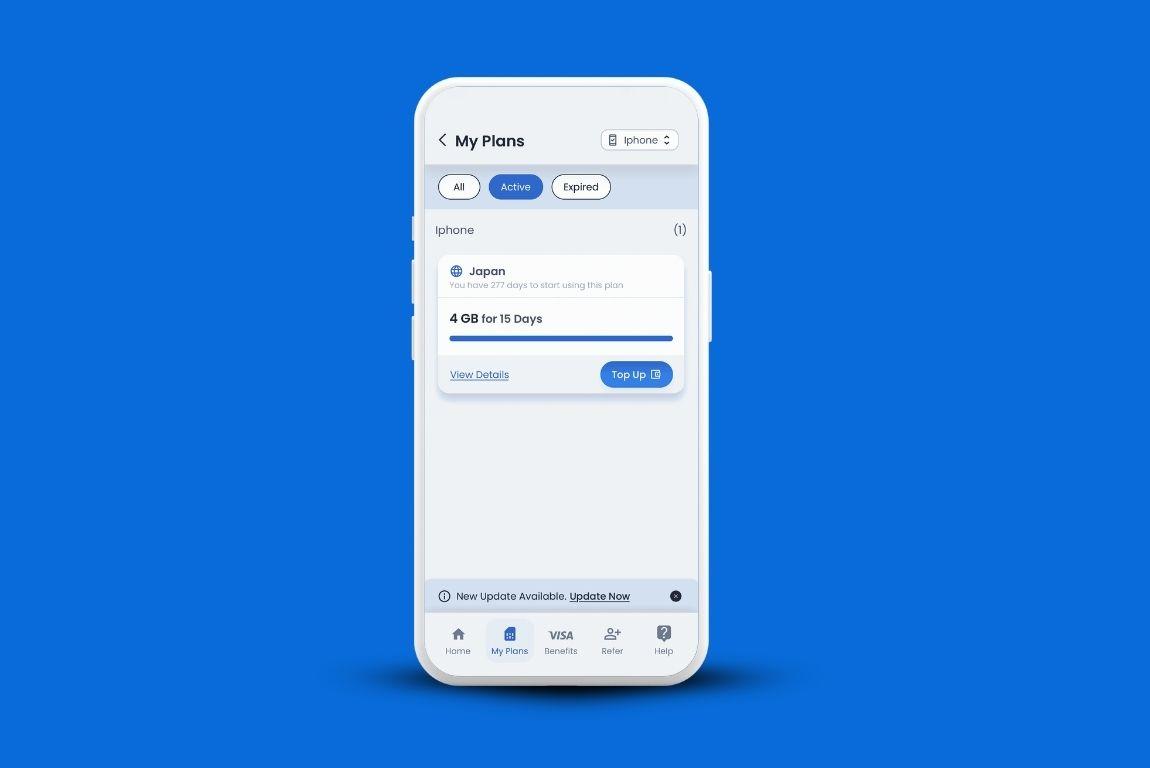
Yes, and the mechanism matters here. Instead of a surprise bill showing up after the trip, your plan simply stops once you hit the limit you chose.
If you want more, you add it and see the price before you confirm, nothing sneaks onto a statement later. That alone removes most of the anxiety people carry about roaming.
If you choose an unlimited plan, you won't run out of data during your trip. Most eSIM providers, including GigSky, apply a fair usage policy, so after you've used a certain amount of high-speed data, your speeds may slow down for the rest of that 24-hour period.
Your high-speed data resets 24 hours after you started using it, and you'll continue to have data for the full number of days your plan covers.
GigSky is also a mobile operator rather than a reseller, which means the eSIM connects to the strongest available network the moment you land, no manual setup required.
You install it once before the trip and it just works, whether you're checking into a hotel in Lisbon or catching a train out of Paris a few days later.
What if your trip covers several countries?
A single Europe eSIM covers your whole route without swapping profiles at every border.
That matters on a two-week itinerary that might hit France, Italy, and Spain in the same trip, since juggling a separate eSIM per country burns time and, ironically, storage space on your phone. (Confirming exact country coverage for the Europe multi-country plan before this goes live, want the number to be airtight.)
Is the eligible Visa benefit worth checking before you go?
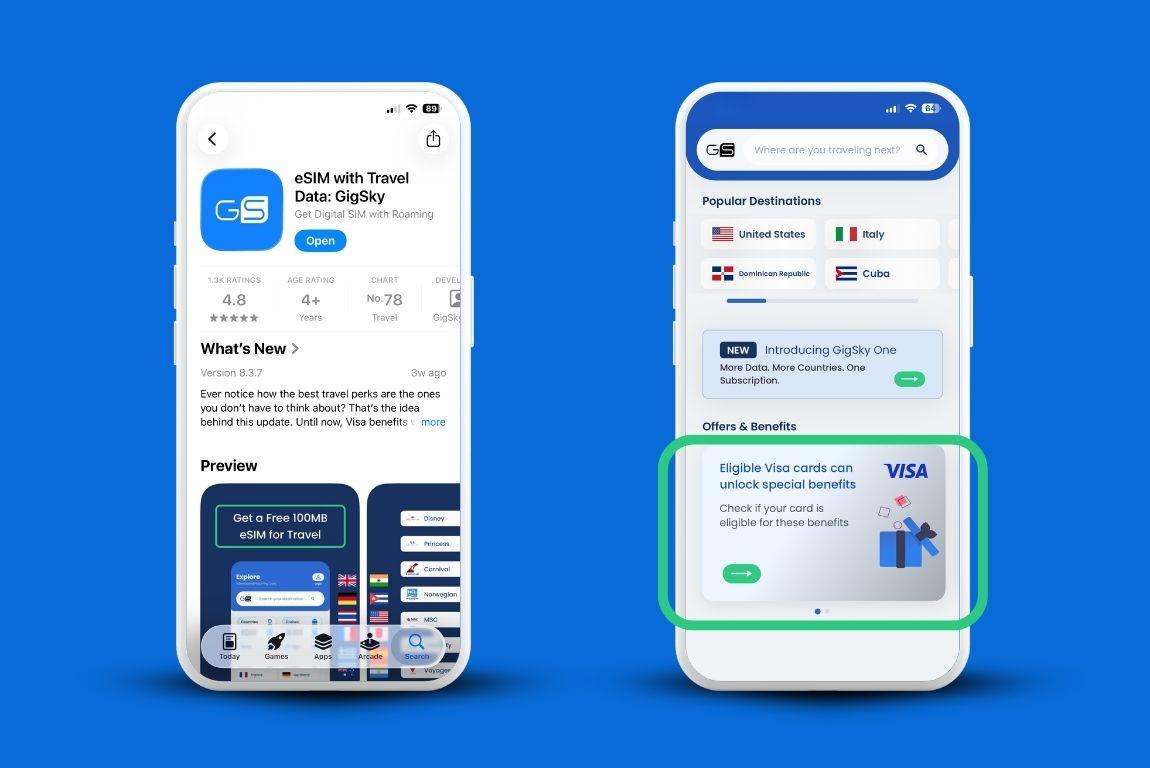
If you carry an eligible Visa card, you might already have complimentary data waiting for you in Europe, you can get up to 5GB of free data if your card was issued in the Americas and free unlimited data in selected destinations if your card was issued anywhere in the world.
Visa Infinite cardholders get 7 days of free unlimited data in the UK and France plus 30% off additional plans, and other eligible Visa cards get 3 days free unlimited plus 20% off.
Check the Visa banner inside the GigSky app and confirm your card once. Card verification doesn't charge you anything.
How do you avoid running out mid-trip without overpaying?
Start smaller than you think you need. A free trial on day one shows you your actual pace of use before you spend anything, and you can size up from there.
This avoids two things at once: paying for a chunky plan you never touch, and getting caught short two days before you fly home.
FAQ
How much data do I need for a two-week Europe trip, really?
Somewhere between 8GB and 14GB covers most moderate travelers. Light users can go lower, heavy streamers should plan higher or get an unlimited plan.
What data do I need on my phone if I already have offline maps downloaded?
Less than someone navigating live, but not zero. Offline maps handle the route, though anything that changes mid-trip, a closed street, a canceled train, still needs a live connection to reroute.
How many GB of data do I need if I'm splitting a hotspot with a travel partner?
Double whatever your solo estimate was, at minimum. Hotspot use also drains battery faster, so most travel pairs do better with two separate eSIMs than one shared connection.
Does using data drain my battery faster?
Yes, particularly navigation and hotspot use. Downloading video or music in advance over hotel WiFi and watching it offline later saves both battery and data for the parts of the trip that actually need a live connection.
Ready to check your own numbers? Try GigSky's free trial before your next flight.
Recap: How much data do I need for Europe
- Light users: 2–4GB over two weeks, mostly WiFi with occasional maps
- Moderate users: 8–14GB, daily navigation plus social media
- Heavy users: 20–30GB+, regular streaming and video calls
- Eligible Visa cardholders traveling to the UK or France may already have complimentary data through Visa Destinations
- A single eSIM that auto-connects across countries beats swapping one per border
Start with a free trial, see your real number on day one, and size up from there.